Khmer New Year
A Celebration of Renewal, Family and Community
Khmer New Year, or Choul Chnam Thmey (ចូលឆ្នាំថ្មី), is one of the most joyful and important celebrations in Cambodian culture.
Traditionally celebrated over three days in April, Khmer New Year marks a time of renewal — a time to leave behind the old year, welcome the new, honour the Buddha and elders, make merit, spend time with family and celebrate together as a community. The three traditional days are associated with Maha Sangkran, Virak Vanabat and Virak Loeng Sak.
For Cambodian communities in Australia, Khmer New Year brings together Buddhist faith and Cambodian culture in a particularly visible way. The temple becomes a place of prayer and blessing, but also of food, friendship, music, laughter and reunion.
It is a celebration that can be shared by grandparents, parents, children and friends — each generation experiencing Khmer New Year in its own way while celebrating together.
The Meaning of Khmer New Year
Khmer New Year represents more than the beginning of another year.
It is a time to reflect upon the year that has passed and begin again with good intentions.
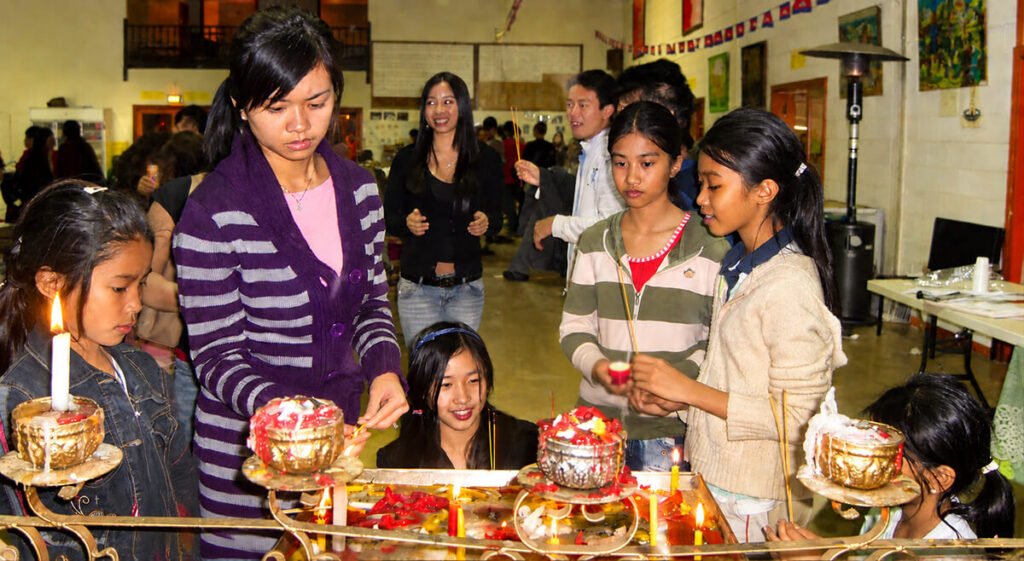
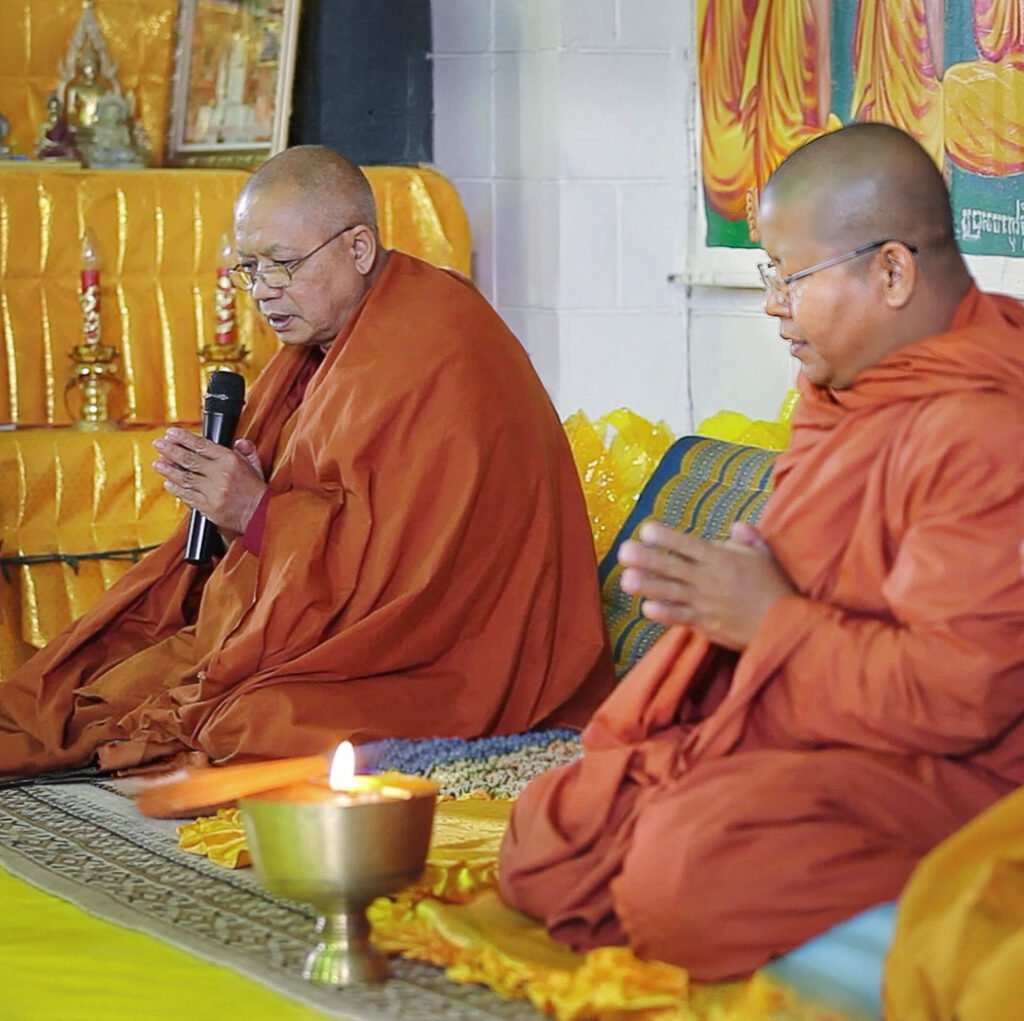
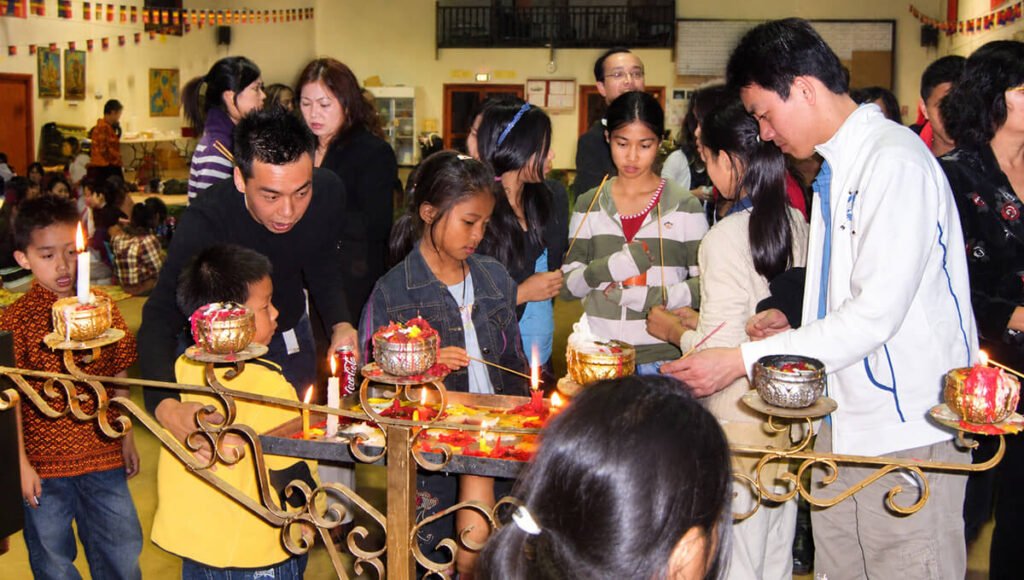
Families visit the temple to make merit, offer food to the monks, receive blessings and participate in Buddhist ceremonies. Respect for parents, grandparents and elders also holds an important place in the celebration. Traditional observances include giving to others and, on the final day, bathing Buddha images with scented water as an expression of respect and renewal.
The New Year therefore reminds us that renewal is not only about changing the calendar.
It can also mean renewing our generosity, kindness, patience, gratitude and relationships with one another.
Three Days of Khmer New Year
Traditionally, Khmer New Year is celebrated over three main days.
The first day – Maha Sangkran (មហាសង្ក្រាន្ត) marks the arrival of the New Year. Families prepare their homes, make offerings and welcome the beginning of a new year.
The second day – Virak Vanabat (វារៈវ័នបត) has a strong association with generosity and giving. Traditionally, people give gifts to parents, grandparents and elders and perform charitable and meritorious acts.
The third day – Virak Loeng Sak (វារៈឡើងស័ក) marks the beginning of the new year in full. Buddhist traditions include offering food, receiving blessings and bathing Buddha images with perfumed water. Respect may also be shown to elders, who in turn offer blessings and good wishes to younger generations.
Although customs may vary between families and communities, the three days share a common spirit of renewal, merit, respect and togetherness.
Generosity Behind the Celebration
One of the most beautiful parts of Khmer New Year is something visitors may not always see.
Long before the celebration begins, many people are already working.
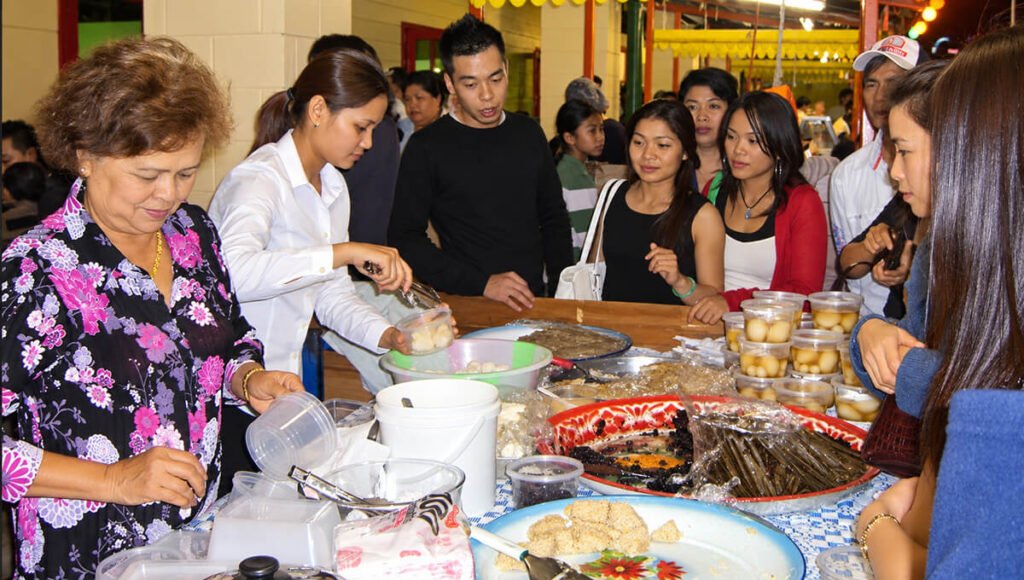
At our temple, elders, families and volunteers may spend days — and sometimes much longer — preparing for the New Year. They shop for food and drinks, prepare ingredients, cook, organise supplies, clean, arrange spaces and help wherever they are needed. Some remain at the temple for long periods so that preparations can continue.
Others contribute by purchasing food, drinks and supplies, making donations or simply offering their time and labour.
This generosity is an important part of the celebration.
A plate of food prepared for someone else, a carton of drinks donated for visitors, several hours spent cooking in the kitchen, or staying behind to clean after everyone has gone home may seem like ordinary acts.
Together, however, they demonstrate dāna — generosity and giving — through practical acts of kindness and community service.
Khmer New Year is therefore created not only by the ceremonies we see, but by the many quiet acts of generosity behind them.
Khmer New Year in Australia
Khmer New Year in Australia has developed its own wonderful character.
The temple remains at the heart of the celebration. People come to pray, make merit, offer food to monks and receive blessings. But around these Buddhist observances is also a much larger celebration of Cambodian community and culture.
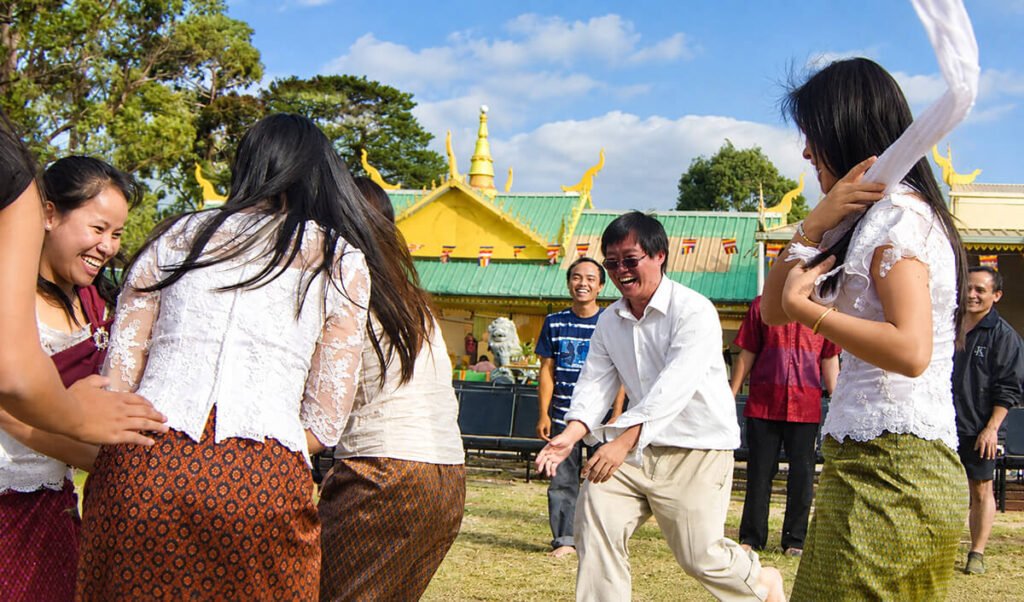
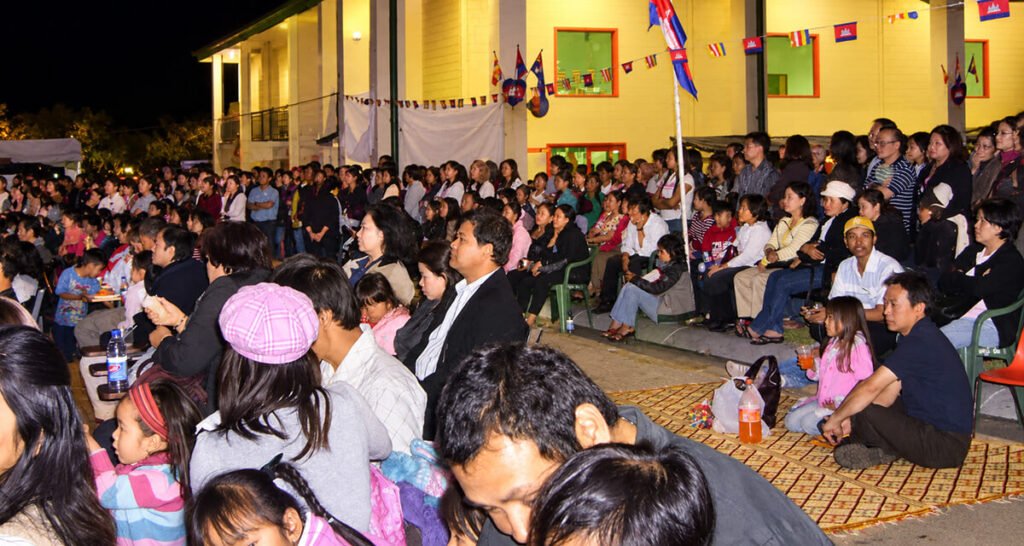
At Wat Buddharangsi, Khmer New Year has brought large crowds together for Buddhist chanting and blessings, communal meals, Cambodian food, traditional games, music and dancing.
Music is an especially joyful part of the occasion. Cambodian singers and performers may visit Australia during the New Year season, allowing the community to enjoy Khmer music together far from Cambodia. Similar Khmer New Year celebrations at Australian temples have long combined religious observances with food fairs and musical performances by Cambodian singers.
For a few days, the temple becomes much more than a place people visit individually.
It becomes a gathering place for an entire community.
Music, Dancing and Traditional Games
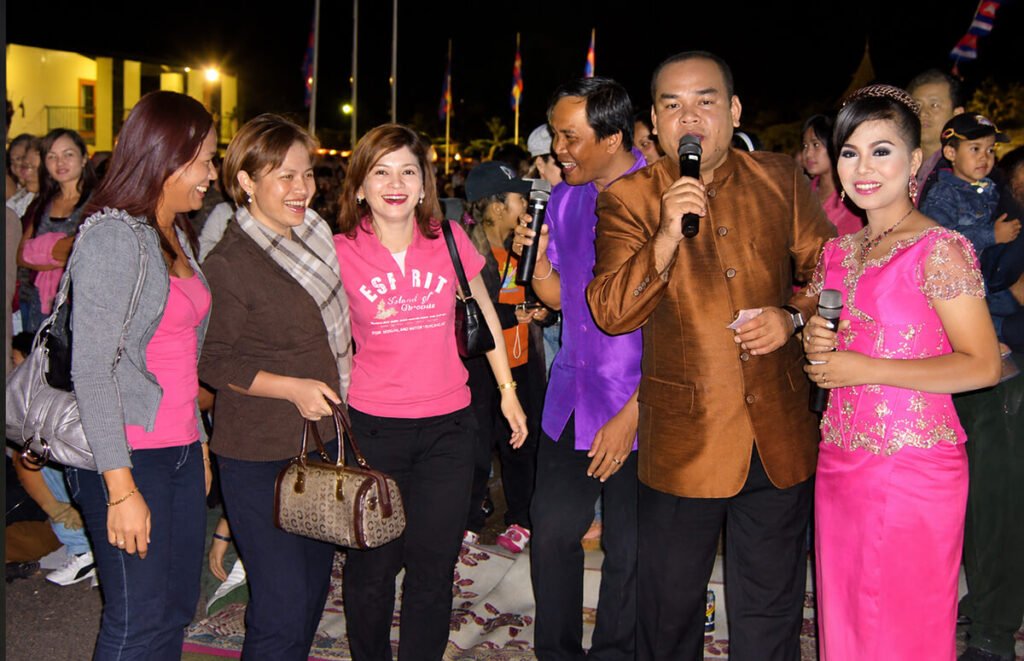
Khmer New Year has always made room for joy.
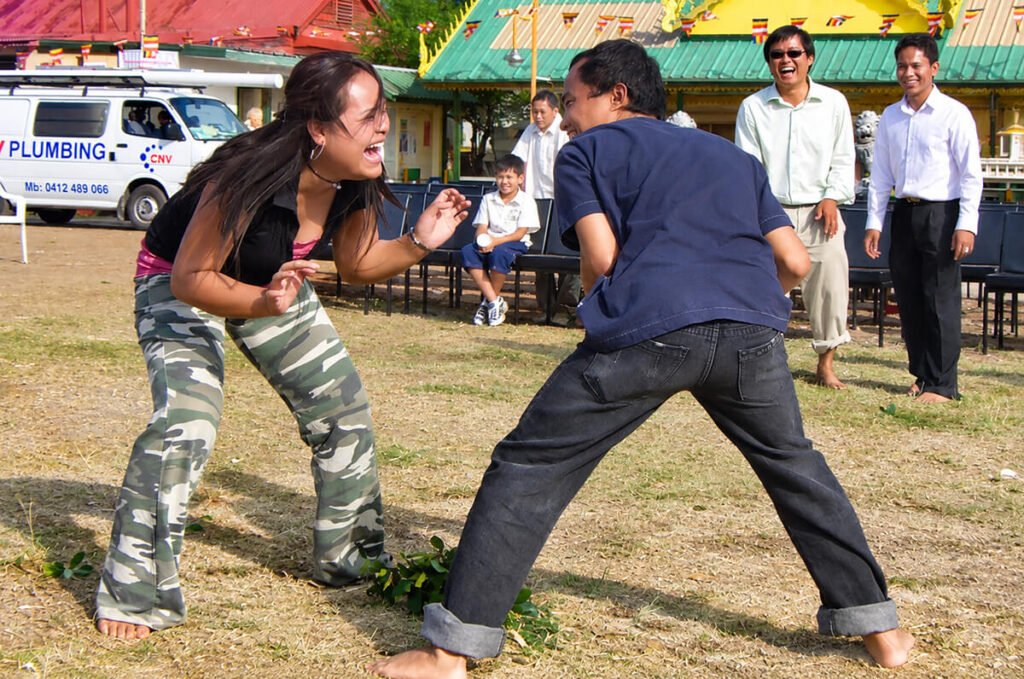
Music and dancing bring people together, while traditional games give children and adults an opportunity to participate rather than simply watch.
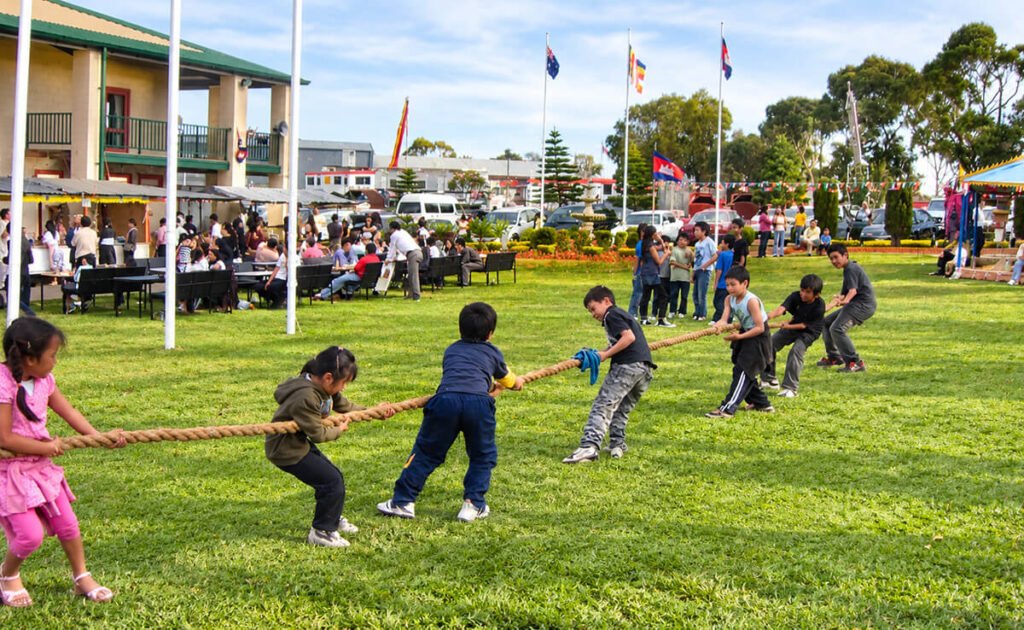
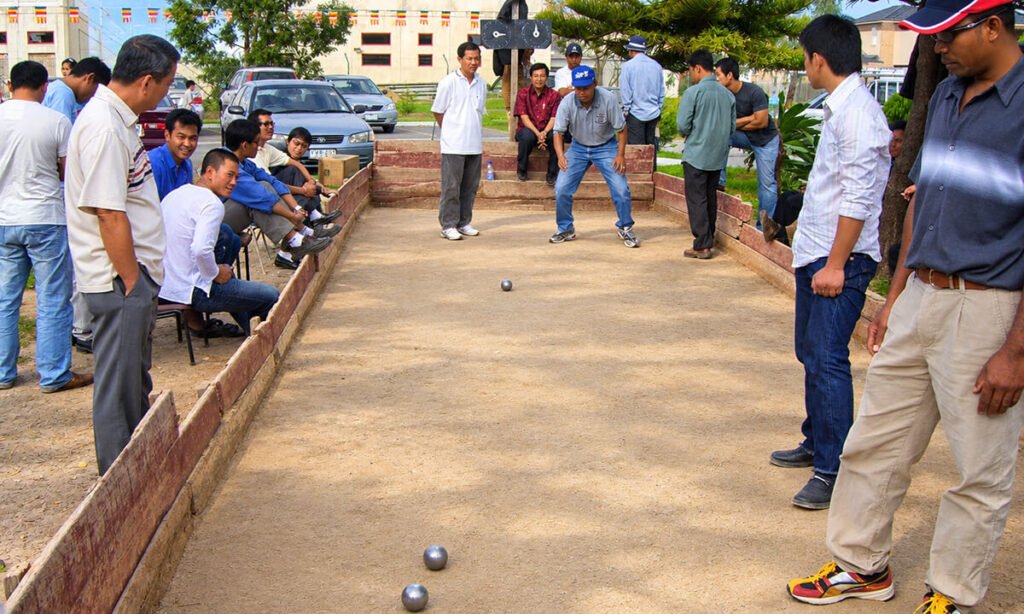
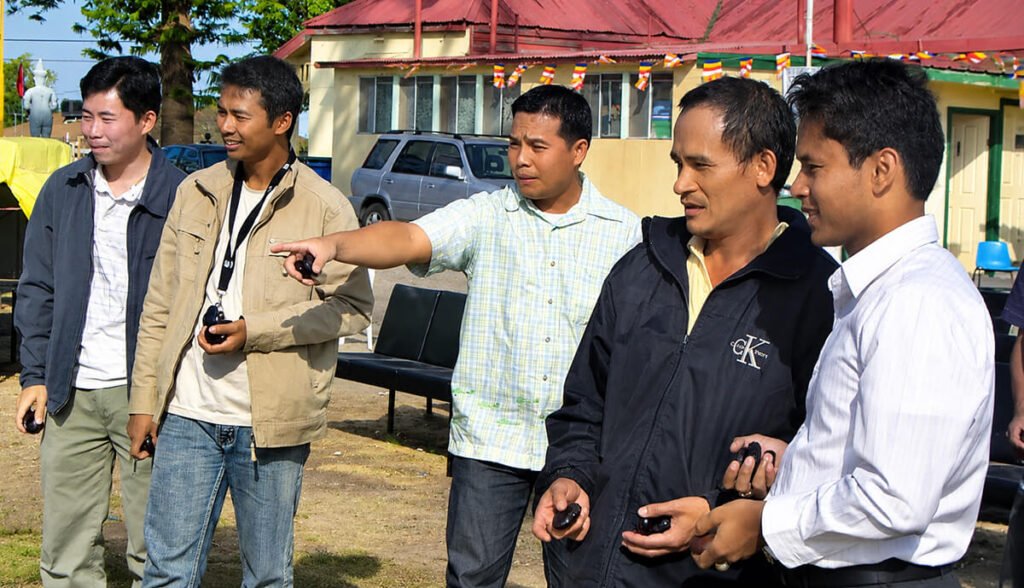
Traditional Khmer New Year games include Bos Angkunh (បោះអង្គុញ), Chol Chhoung (ចោលឈូង), tug-of-war and other community games. These games have traditionally been played around villages and pagodas and remain particularly associated with Khmer New Year.
Here in Australia, celebrations can also include familiar recreational activities such as bowling and other games enjoyed by families and friends.
Not every activity needs to be ancient to become part of the community’s New Year experience.
The important thing is that people are together — elders watching younger people play, children laughing with friends, families sharing food, and different generations enjoying the same celebration.
Khmer New Year for Young Cambodian Australians
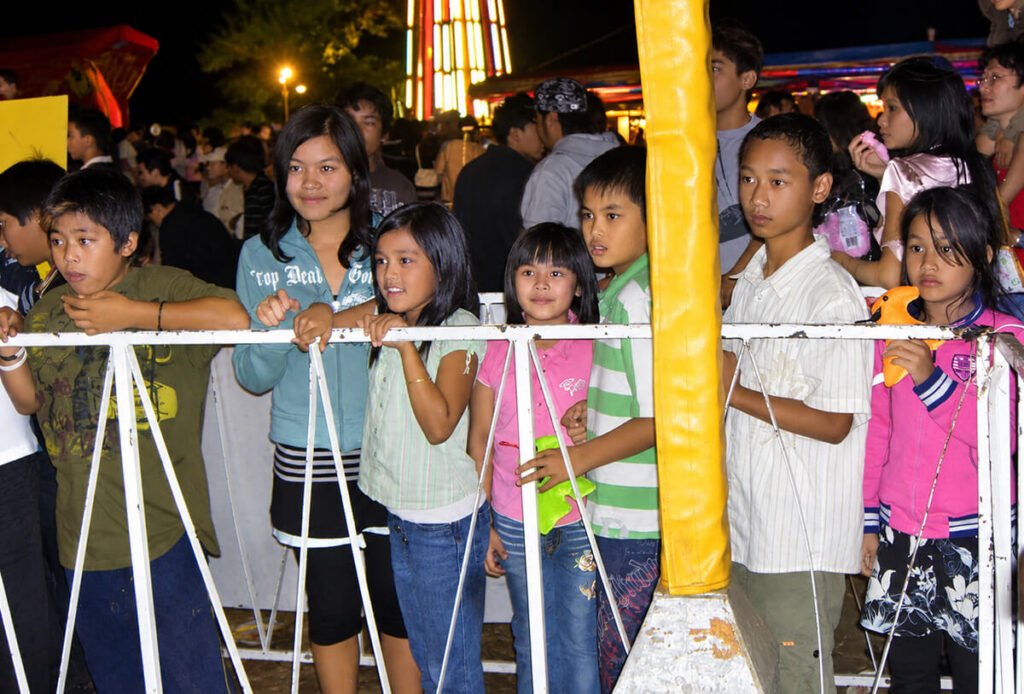
For children growing up in Australia, Khmer New Year can be one of the easiest and happiest ways to connect with their Cambodian heritage.
They may first come because of the food, music, games or friends.
But while they are there, something else happens.
They hear Khmer being spoken around them. They see monks chanting. They watch their grandparents make offerings. They taste Cambodian food, hear Cambodian music, learn traditional games and meet other Cambodian families.
Culture becomes something they can experience, rather than something they are simply told about.
A child does not need to understand every ceremony on their first visit.
Understanding can grow gradually.
Today they may come for a game. Tomorrow they may ask why their grandmother offers food to the monks. Later they may begin to understand the meaning of making merit, respecting elders and giving generously.
That is how tradition can continue naturally from one generation to another.
Honouring Our Elders
Khmer New Year also gives us an opportunity to recognise the important place of elders within our families and community.
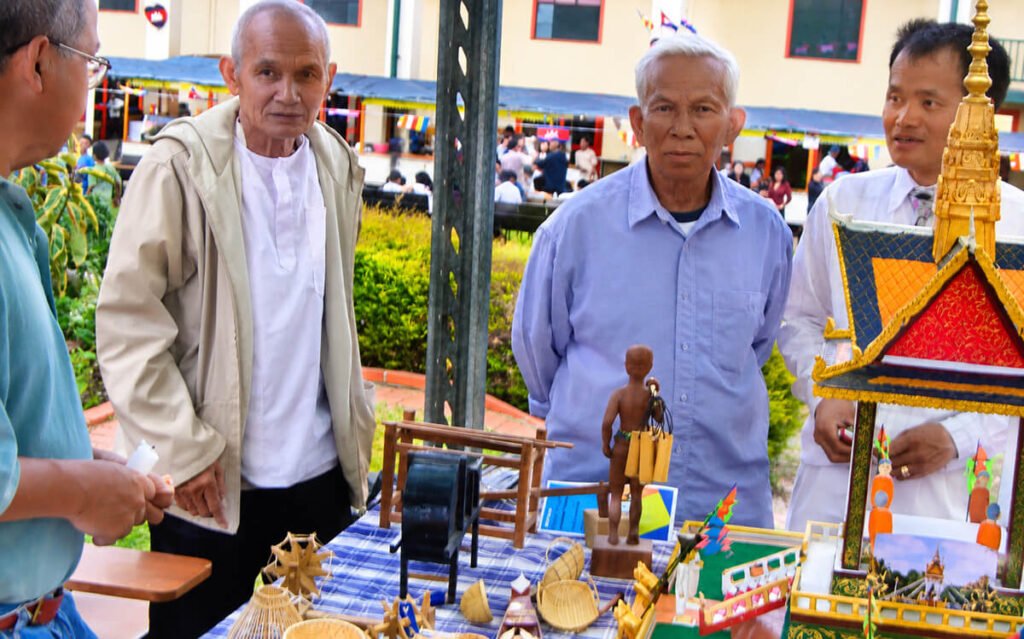
Many elders carry knowledge that cannot easily be found in books — how particular foods are prepared, how ceremonies are conducted, how offerings are arranged, the words of prayers, traditional songs and the countless small customs that make a celebration feel Cambodian.
During New Year preparations, younger generations have an opportunity to learn simply by being beside them.
Helping an elder prepare food, arrange an offering or serve visitors may seem like a small thing, but these moments allow knowledge and values to pass naturally between generations.
Our elders do not preserve tradition only by explaining it.
Very often, they preserve it simply by doing it — and allowing the next generation to join them.
A Celebration We Build Together
A successful Khmer New Year celebration does not belong to one person or one generation.
It is built by monks, elders, volunteers, families, donors, cooks, musicians, performers, young people and visitors.
Some contribute money.
Some contribute food.
Some contribute time.
Some cook.
Some clean.
Some organise.
Some perform.
And many simply come and participate.
Every contribution helps create the celebration.
For Cambodian Australians, Khmer New Year is therefore much more than three days on a calendar.
It is a time when faith, generosity, family, culture and community come together.
And perhaps one of its most beautiful lessons for the next generation is very simple:
A community becomes stronger when people give, help and celebrate together.
សព្វេ សត្តា ភវន្តុ សុខិតត្តា
May all beings be happy.