Buddhism — A Bridge Between Generations
A Teaching for Life
Buddhism in Melbourne is practised by many communities, including generations of Khmer Australians who continue the Buddhist traditions brought from Cambodia. Buddhism is a vast and ancient tradition, and no single page could explain everything the Buddha taught.
Our hope is simpler.
We hope this website can become a bridge between generations — connecting the wisdom and experience of our elders with younger generations who are growing up in a very different world.
For many Cambodian families, Buddhism is more than a religion. It is woven into our way of life, our traditions, our celebrations, our respect for elders, our compassion for others and the way we respond to both happiness and hardship.
Some of us have a deep belief in karma, rebirth and life after death. Others may be uncertain. Younger generations may question religion altogether.
There is room for those questions.
The Buddha’s teachings do not need to begin with believing everything. They can begin with something much simpler:
Be kind.
Be compassionate.
Respect life.
Do not intentionally harm others.
Be mindful of your thoughts, words and actions.
And perhaps most importantly, learn to understand yourself.
“Is There Any Benefit in Following the Buddhist Path?”
This is a question younger Cambodian Australians sometimes ask.
It is a fair question.
Choosing to follow the Buddha’s teachings is personal. Buddhism should not be something we embrace simply because our parents or grandparents tell us to. Faith cannot be forced.
Yet even for someone who is uncertain about religion, many Buddhist teachings remain deeply relevant to modern life.
Consider a simple question:
What kind of person do I want to become?
A person controlled by anger, jealousy, greed and resentment?
Or someone who develops compassion, patience, generosity, understanding and peace of mind?
The benefits may not always be something we can see or measure. They can appear gradually in the way we think, the way we speak, the decisions we make and the way we treat other people.
When we understand that our actions have consequences, we become more thoughtful about how we live.
When we practise compassion, our concern begins to extend beyond ourselves and our immediate families.
We learn to care about our neighbours, our community and even people we have never met.
Buddhism in Melbourne and Cambodian Life
For generations, Buddhism has profoundly influenced Cambodian society. Today, Buddhism in Melbourne continues many of these traditions within the Khmer Australian community.
A Cambodian child growing up in a Buddhist family may encounter Buddhist teachings long before understanding the word “Buddhism”.
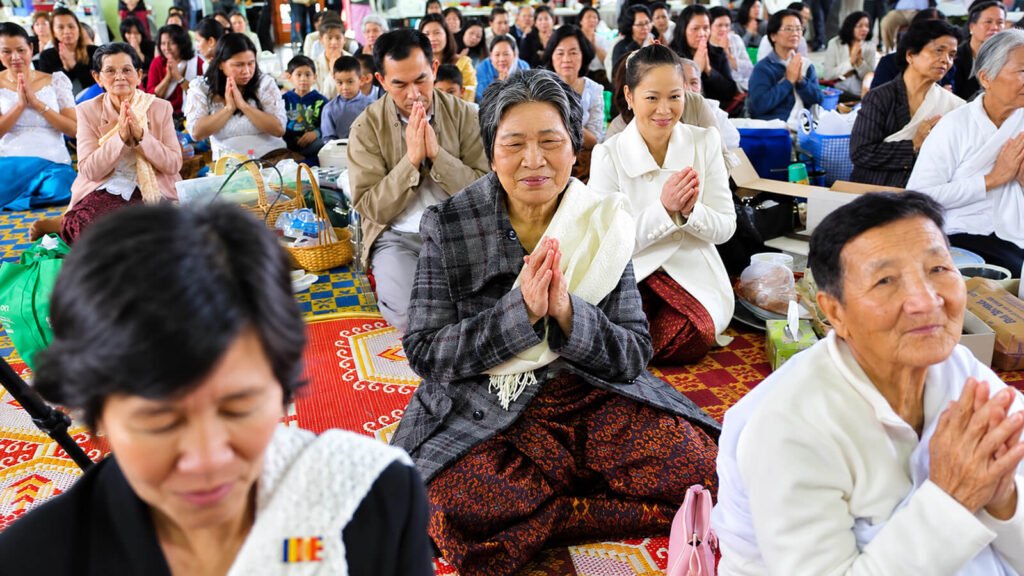
We see our parents and grandparents offering food to monks.
We join them at the temple.
We celebrate Khmer New Year, Pchum Ben, Vesak and Kathina.
We learn to respect our elders, remember our ancestors, practise generosity and help those who are less fortunate.
These traditions quietly teach values.
For this reason, Buddhism can become part of our way of seeing the world even when we do not consciously think of ourselves as particularly religious.
For Cambodian Australians born and raised far from Cambodia, understanding these traditions can also help us understand where we came from and why our parents and grandparents lived the way they did.
Finding Strength During Our Darkest Times
The importance of Buddhism to Cambodian people becomes particularly clear when we remember our recent history.
During the Khmer Rouge period, Cambodia experienced unimaginable suffering. Families were separated. Lives were lost. Buddhist institutions were devastated, and monks were among those persecuted.
Those who survived carried memories of extraordinary hardship.
Many later arrived in countries such as Australia as refugees, sometimes with very little, rebuilding their lives in unfamiliar surroundings and languages.
For many members of that generation, modern psychological and counselling services were unfamiliar, difficult to access or culturally distant.
So where did people find strength?
For many, one source was Buddhism.
They prayed.
They visited temples.
They spoke with monks.
They made offerings and performed acts of merit.
They gathered with other Cambodian families.
They listened to Buddhist teachings about suffering, impermanence, compassion and letting go.
Buddhism could not erase what had happened. But faith, spiritual practice and community could provide comfort, meaning and a place to belong while people rebuilt their lives.
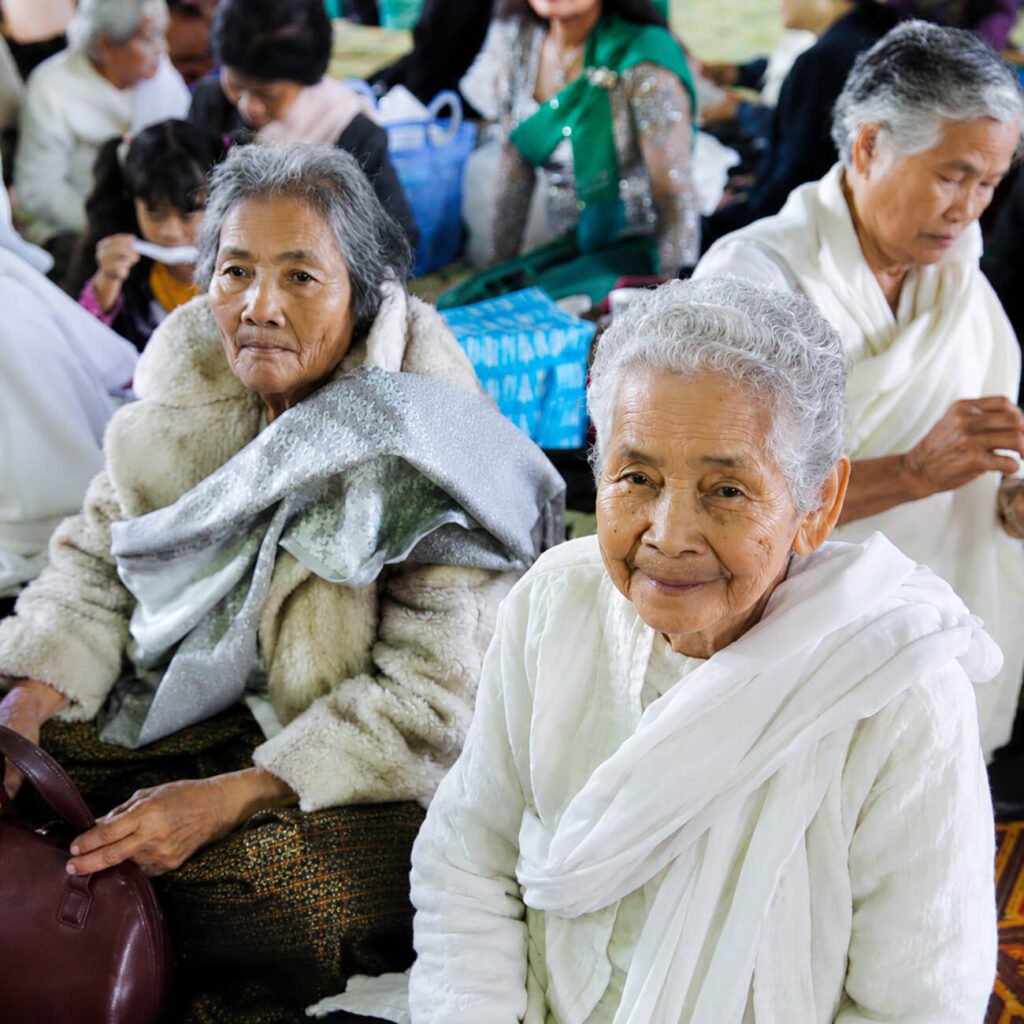
This is one reason the Buddhist temple became so important to Cambodian communities in Australia. It was not simply a place of worship.
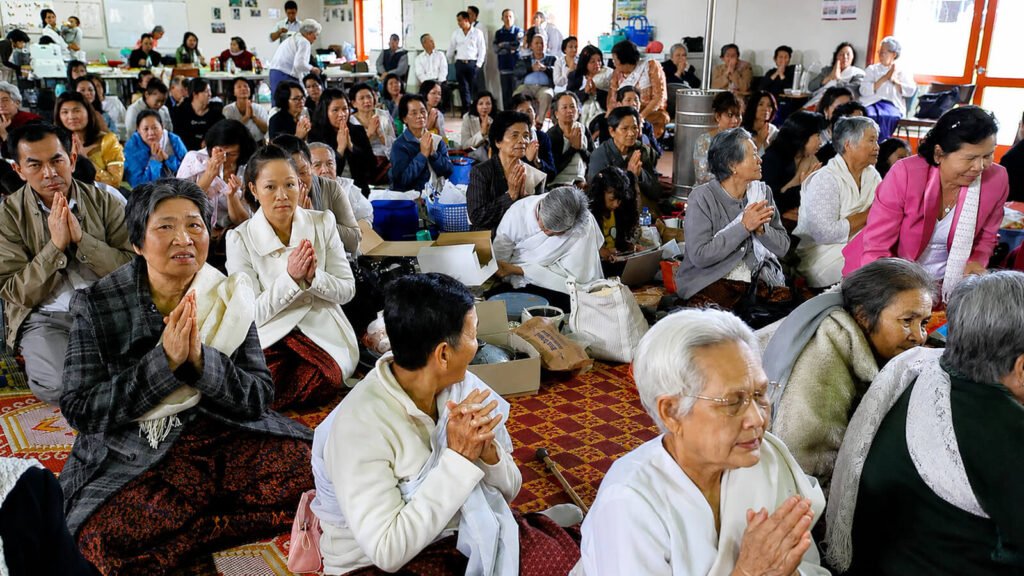
It became a place of healing, culture, memory and community.
Understanding Suffering
More than 2,500 years ago, the Buddha placed a simple but profound observation at the centre of his teaching:
Suffering exists.
We experience loss.
We become ill.
People we love eventually leave us.
Things change when we desperately want them to remain the same.
We sometimes do not get what we want — and sometimes, even after getting what we want, we discover that it still does not make us happy.
The Four Noble Truths invite us to look deeply at suffering: to recognise it, understand its causes, understand that freedom from suffering is possible, and follow a path toward that freedom.
The Noble Eightfold Path then provides guidance for how we live — through right understanding, intention, speech, action, livelihood, effort, mindfulness and concentration.
These teachings are ancient, but the human problems they address are not.
Anger is still anger.
Fear is still fear.
Greed is still greed.
Loss still hurts.
And compassion still matters.
A Question for the Next Generation
You do not have to accept Buddhism simply because your parents are Buddhist.
You do not have to stop asking questions.
In fact, questioning can be the beginning of understanding.
Ask what these teachings mean.
Explore them.
Learn why your grandparents went to the temple.
Ask why your parents make offerings to monks.
Learn why we remember our ancestors during Pchum Ben.
Learn what karma actually means.
Learn why meditation has been practised for centuries.
Learn what the Buddha meant when he spoke about attachment, suffering, compassion and the nature of the mind.
Then decide what value these teachings have in your own life.
Perhaps the bridge between generations does not require the younger generation to believe everything exactly as their grandparents did.
Perhaps it begins simply by understanding one another.
The Path Begins With How We Live
Whether we think deeply about rebirth and the next life, or simply about the life we are living today, the Buddha’s teachings invite us to examine our actions.
Are we causing harm or reducing it?
Are we driven by hatred or understanding?
Do we take more than we need, or are we generous?
When someone suffers, do we turn away, or do we show compassion?
When anger arises, do we immediately act upon it, or can we understand it before it controls us?
Buddhism is not only something practised inside a temple.
It is practised in our homes.
In the way we speak to our parents.
In the way we raise our children.
In the way we treat our neighbours.
In the way we respond to strangers.
And in the choices we make when nobody else is watching.
The Buddhist path is ultimately not only about what we believe. It is about how we live.
At Wat Buddharangsi, we hope to preserve these teachings not simply as something inherited from the past, but as wisdom that each new generation can explore, question, understand and carry forward in its own way.
May this website help build that bridge — between young and old, between Cambodia and Australia, and between the wisdom of the past and the lives we are living today.