Our Heritage
What Does Khmer Culture and Heritage Mean to You?
As Khmer Australians, what does Khmer culture and heritage really mean to us?
Is it the language we speak?
The food our parents and grandparents taught us to prepare?
The sound of Khmer music, the celebration of Khmer New Year, the solemn days of Pchum Ben, or the sight of our families gathering together at the temple?
Or does our heritage reach much further back — across centuries, beyond our own memories, to the civilisation of our ancestors?
For many Khmer people, when we think about our heritage, inevitably our thoughts return to Angkor.
We Are Descendants of Angkor
More than a thousand years ago, the Khmer civilisation created one of the great societies of Southeast Asia.
At its height, the Khmer Empire’s power and cultural influence extended across large parts of mainland Southeast Asia, reaching into territories that today form Cambodia, Thailand, Laos and Vietnam.
Its kings built cities, temples, roads, reservoirs and immense water-management systems. Its architects, engineers, artists and craftspeople left behind achievements that continue to inspire the world.
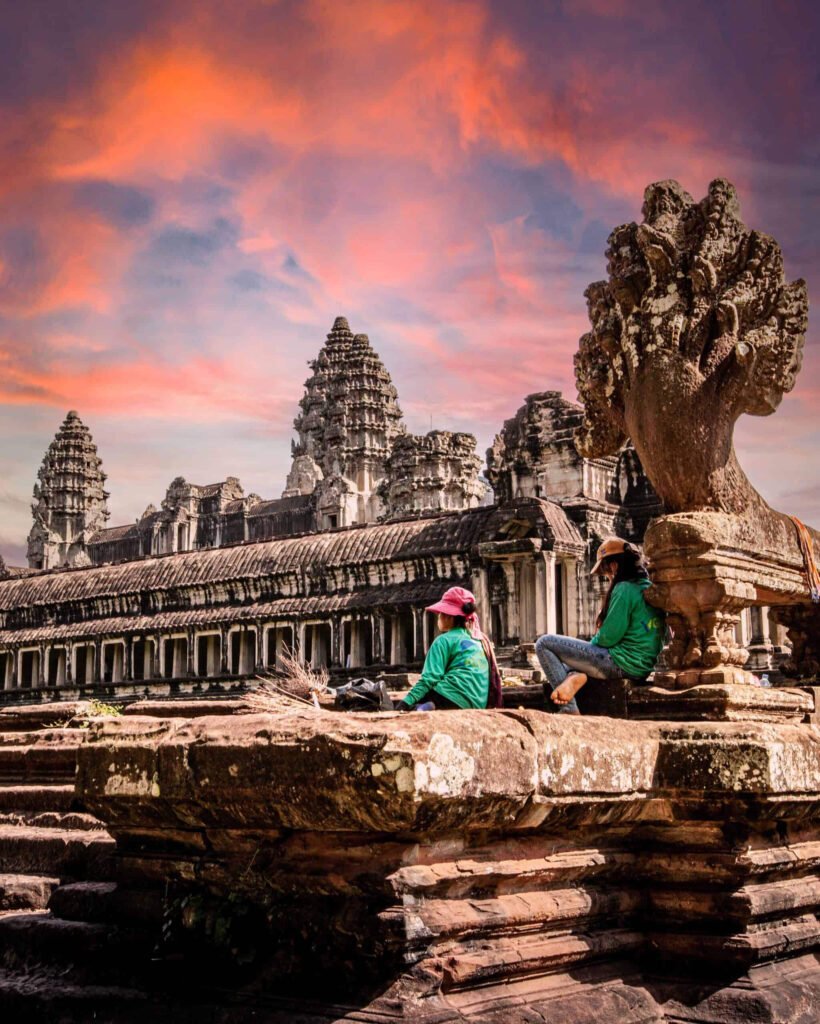
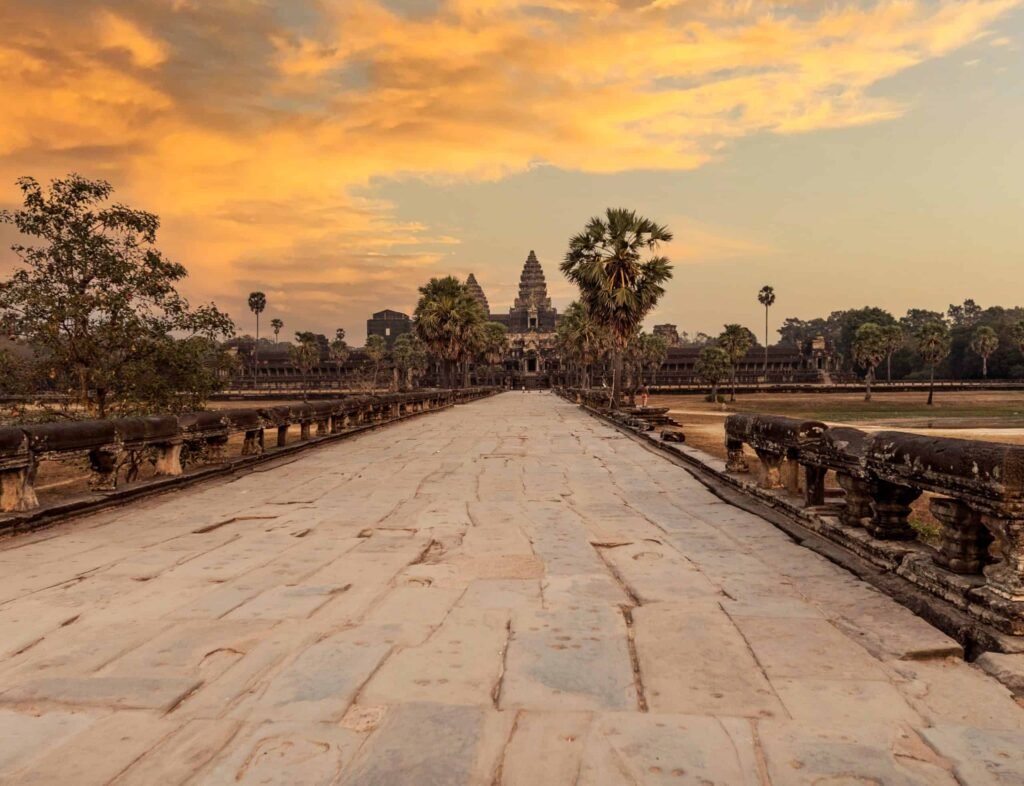
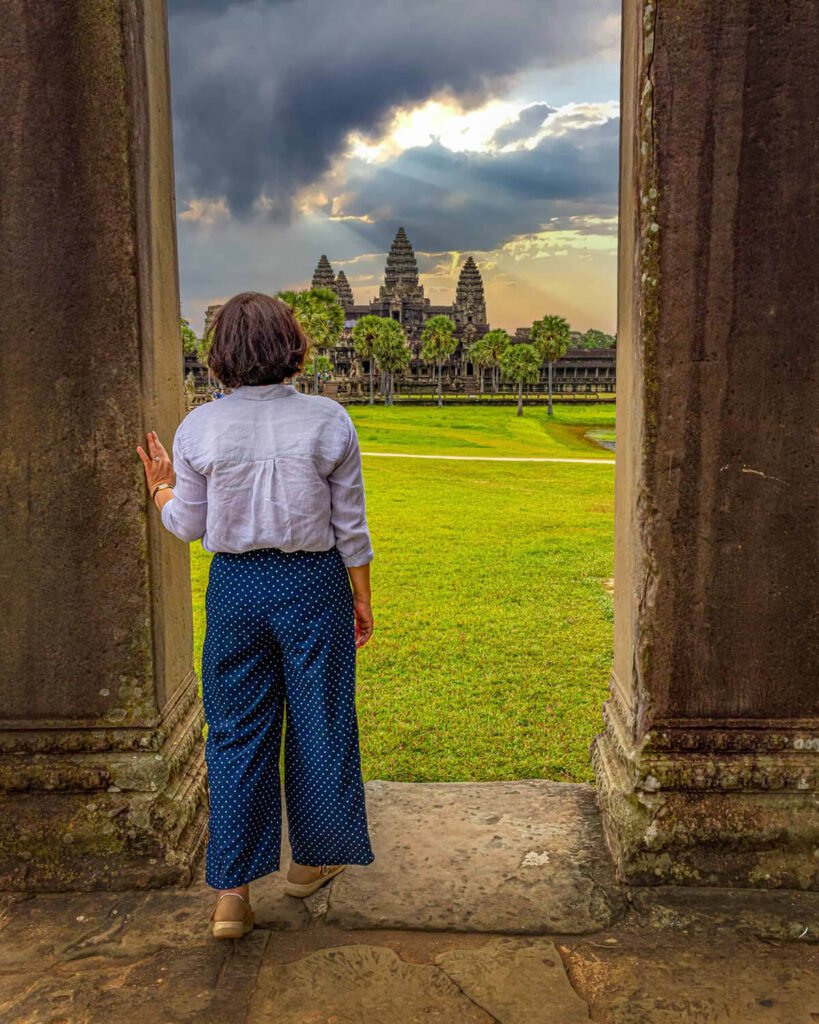
And standing above them all is Angkor Wat.
When we look upon Angkor Wat, we see much more than an ancient monument.
We see the work of our ancestors.
We see enormous stones shaped, transported and assembled with extraordinary skill. We see towers rising above the Cambodian landscape, intricate carvings covering vast galleries, mathematical proportions, sophisticated engineering and a design filled with religious and cosmological meaning.
Constructed in the 12th century under King Suryavarman II, Angkor Wat became one of humanity’s greatest architectural achievements and today stands as the world’s largest religious monument.
For Khmer people, however, its significance cannot be measured simply by its size.
Angkor Wat reminds us of what our ancestors were capable of achieving.
It is a symbol of creativity.
A symbol of knowledge.
A symbol of endurance.
And above all, a symbol of Khmer identity.
A Civilisation of Knowledge
Our heritage is not written only in stone.
It is also found in the knowledge our ancestors left behind.
One remarkable example comes from an ancient stone inscription known as K-127, discovered in Cambodia.
Dating to the 7th century, the inscription records the number 605 in an ancient numerical system. A small dot is used in the position where we would use the digit zero today.
This inscription is especially important because Cambodia preserves one of the world’s earliest known inscriptions using zero as a placeholder in a positional number system.
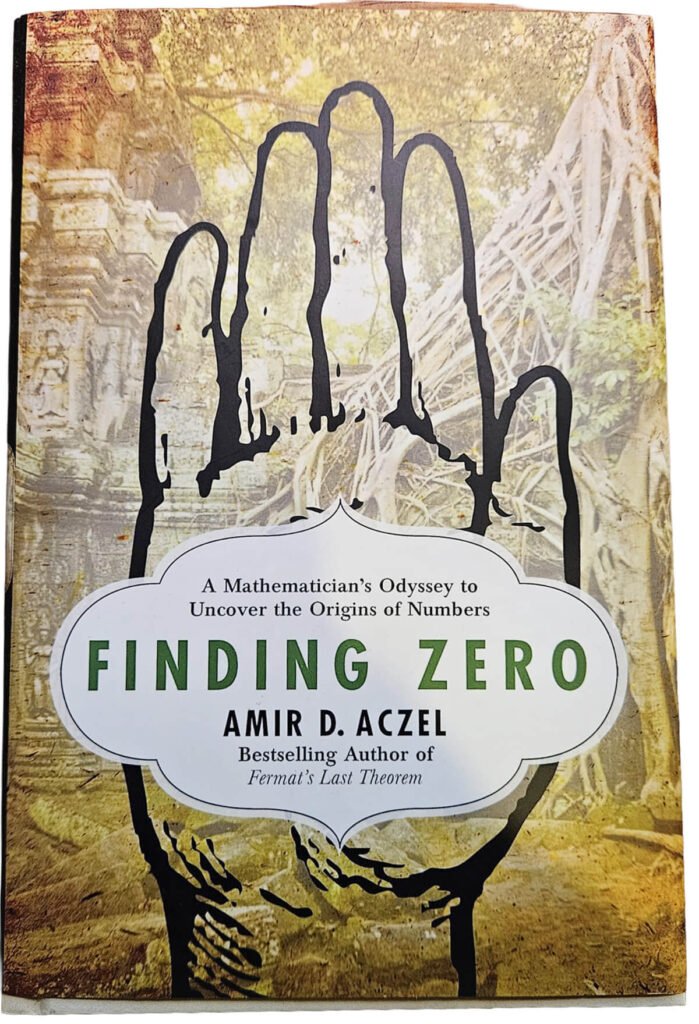
The story of this inscription was brought to wider international attention by mathematician and author Amir D. Aczel, who travelled to Cambodia while researching the origins of zero. His search for the long-lost K-127 inscription became the subject of his book Finding Zero: A Mathematician’s Odyssey to Uncover the Origins of Numbers.
The history of zero is complex, and its development involved mathematical ideas emerging and evolving across different ancient cultures. We should therefore be careful not to claim that the Khmer civilisation alone invented the modern zero.
What we can say with confidence is something remarkable in its own right:
More than 1,300 years ago, people in ancient Cambodia were already using a symbol for zero within a sophisticated numerical system.
That small mark carved into stone connects Cambodia to one of the most important developments in the history of mathematics.
Today, zero is so familiar that we rarely think about it. Yet without zero, modern mathematics would be profoundly different. Science, engineering, finance and computing all depend upon numerical systems in which zero plays a fundamental role.
Even the digital world surrounding us — computers, smartphones and the internet — ultimately relies on binary representations built from zeros and ones.
For a young Khmer Australian growing up thousands of kilometres from Cambodia, the K-127 inscription offers another reason to look at our heritage with curiosity.
Angkor tells us that our ancestors were extraordinary builders, architects and artists.
Ancient inscriptions remind us that they also lived within a civilisation of language, learning, mathematics and knowledge.
Our heritage therefore belongs not only to the history of Cambodia.
It also forms part of the wider story of human civilisation.
Our Language Is Our Living Heritage
Then there is our language.
The Khmer language connects us not only with Cambodia today, but with generations stretching far into our past.
Ancient Khmer inscriptions survive on stone throughout Cambodia and neighbouring regions, preserving records of kings, religious life, communities and society.
But a language survives only when people continue to speak it.
For Khmer Australians, preserving Khmer culture and heritage creates both an opportunity and a responsibility.
When grandparents speak Khmer with their grandchildren, when parents teach their children Khmer words, when our monks deliver teachings in Khmer, and when younger generations learn to read and write our script, something important is happening.
Heritage is being passed from one generation to another.
Without that connection, language can disappear within only a few generations.
Our Traditions Keep Us Connected
Our heritage also lives through the traditions we continue to practise.
When families gather for Khmer New Year, we are participating in traditions shared by generations before us.
When we observe Bun Pchum Ben, remember our ancestors and make offerings at the temple, we maintain a spiritual connection between past and present.
When we celebrate Vesak, participate in Kathina ceremonies, prepare traditional Khmer food, wear traditional clothing, perform Khmer music and dance, or teach our children to respectfully greet their elders, we are doing more than preserving customs.
We are keeping our heritage alive.
Heritage does not survive simply because it appears in history books or museums.
From Angkor to Australia
Our ancestors could never have imagined that centuries later their descendants would be living on the other side of the world in a country called Australia.
Yet here we are.
We are Australian, and we are Khmer.
These identities do not have to compete with one another.
Australia is the country in which many Khmer families found safety, rebuilt their lives, raised their children and created new futures.
Cambodia is the civilisation from which our language, traditions, spirituality and cultural memory came.
And Wat Buddharangsi is one of the places where Khmer culture and heritage continue to connect Cambodia and Australia.
Within the temple, an elderly person who remembers Cambodia can sit beside a child born in Melbourne.
One carries memories of the homeland.
The other carries its future.
Between them stands our responsibility to ensure that the connection is never lost.
What Will We Leave Behind?
Angkor Wat has survived for almost nine centuries.
Its stones have endured war, political upheaval, changing kingdoms and the passage of time.
But our heritage cannot survive on stone alone.
It must also survive within us.
So perhaps the most important question is not simply:
What did our ancestors leave for us?
The greater question is:
What will we leave for those who come after us?
Will our children know why Pchum Ben matters?
Will they understand the teachings and values preserved within our Buddhist traditions?
Will they recognise Khmer writing?
Will they know the stories of Angkor?
Will they know that an ancient stone inscription from Cambodia preserves one of the world’s earliest known examples of zero being used within a positional number system?
Will they understand the sacrifices made by the generation that rebuilt the Khmer community here in Australia?
And will they be proud to pass that knowledge to their own children?
Our ancestors gave us Angkor.
Our parents and grandparents carried our culture across oceans.
Our monks and community elders helped preserve it in a new homeland.
Now it is our generation’s turn to carry it forward.
Because heritage is not simply about remembering where we came from.
Heritage is knowing who we are, honouring those who came before us, and ensuring that what they gave us is not lost to those who come after us.