Pchum Ben
បុណ្យភ្ជុំបិណ្ឌ – Remembering Our Ancestors, Our Families and Our Khmer Heritage
Pchum Ben Melbourne is a deeply meaningful time for the Khmer Buddhist community to come together in remembrance, gratitude and faith. For Khmer people, Pchum Ben (បុណ្យភ្ជុំបិណ្ឌ) is one of the most important religious festivals of the year.
It is a time of prayer, remembrance and gratitude — a time when families come together at the temple to make offerings, listen to Buddhist teachings, honour their ancestors and remember those who are no longer with us.
For Khmer Australians, however, Pchum Ben carries another special meaning.
We may now live thousands of kilometres from Cambodia, but during Pchum Ben, the temple becomes a place where generations come together and where our connection with our ancestors, our Buddhist faith and our Khmer heritage remains alive.
What Is Pchum Ben?
Pchum Ben is traditionally observed over a period of 15 days in the Khmer Buddhist calendar.
The first fourteen days are known as Kan Ben (កាន់បិណ្ឌ), when families take turns visiting pagodas, preparing food and making offerings to the monks.
The fifteenth and final day is Pchum Ben (ភ្ជុំបិណ្ឌ), when families gather in greater numbers to honour and dedicate merit to their deceased relatives and ancestors.
According to Khmer Buddhist tradition, acts of generosity and merit-making performed during this period may be dedicated to those who have passed away.
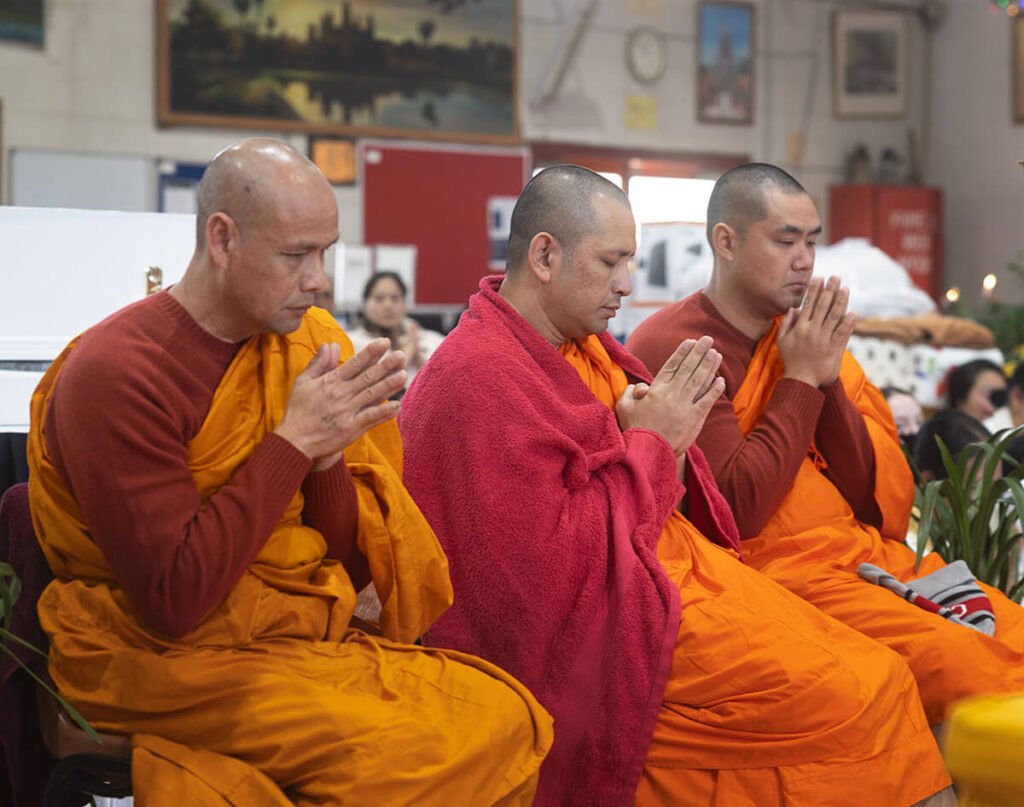
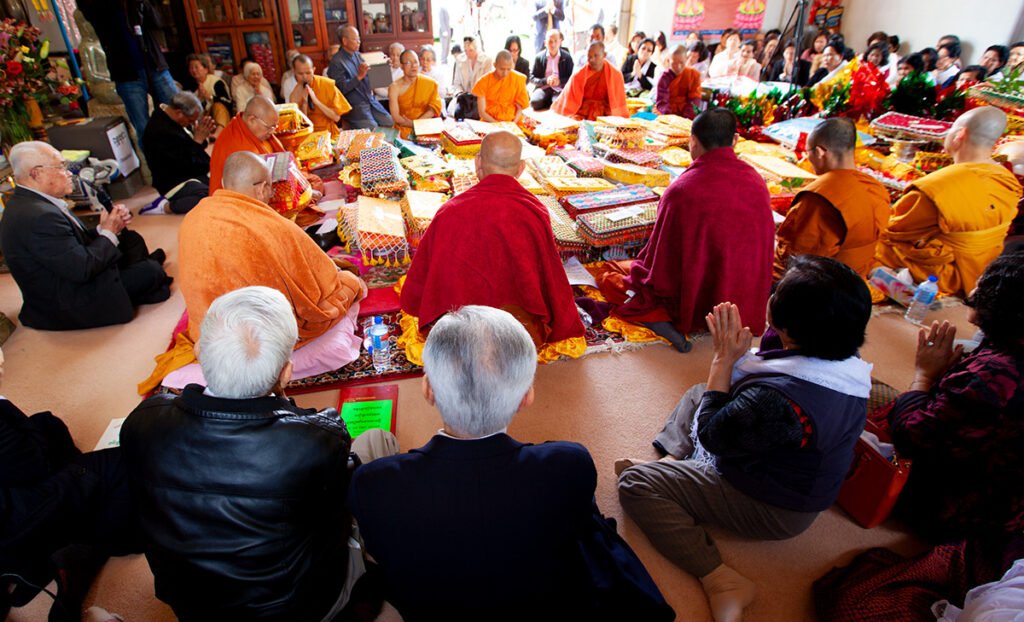
People bring rice, food, fruit, flowers, candles and other offerings to the temple. They offer food to the Sangha, pray, listen to Dharma teachings and dedicate the merit of their good deeds to parents, grandparents, relatives and ancestors who have passed from this life.
But behind these traditions lies a very simple and beautiful message:
Do not forget those who came before you.
A Festival of Gratitude
Pchum Ben reminds us that none of us arrived in this world alone.
Our lives were made possible by generations before us — our parents, grandparents and ancestors.
They cared for their families, endured hardship, made sacrifices and passed down the language, traditions, beliefs and values that helped shape who we are today.
For many Cambodian families in Australia, this message has particular significance.
Our community carries memories of extraordinary hardship. Many of the first generations of Cambodian Australians experienced war, displacement, refugee camps and the tragedy of the Khmer Rouge period before rebuilding their lives in a new country.
Some arrived in Australia with very little.
Yet they worked, raised families, established communities and helped build Buddhist temples so that future generations would have somewhere to gather, pray and remain connected to their heritage.
When we gather for Pchum Ben today, we are therefore remembering more than distant ancestors.
We are also honouring the sacrifices that made our lives in Australia possible.
What Does Pchum Ben Mean for Young Khmer Australians?
For a young Khmer Australian growing up in Melbourne, Pchum Ben may feel very different from the way it was experienced by parents or grandparents in Cambodia.
You may speak English more comfortably than Khmer.
You may not understand every prayer being chanted by the monks.
You may not know why certain foods are offered or understand every Buddhist custom.
And that is okay.
You do not need to understand everything before you can belong.
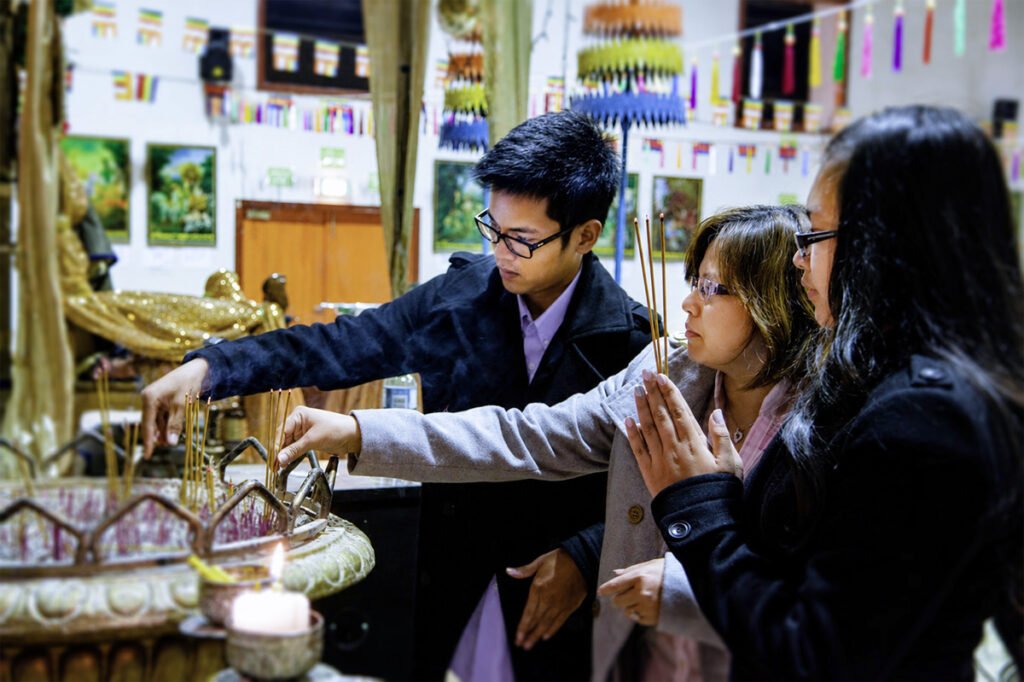
Coming to the temple with your parents or grandparents, offering food, lighting incense, bowing before the Buddha or simply sitting quietly while the monks chant can become a connection between generations.
Perhaps the most important question Pchum Ben asks us is not:
“How well do you know the tradition?”
It is:
“Do you remember where you came from?”
A Bridge Between Generations
One of the greatest challenges for any migrant community is passing its heritage from one generation to the next.
The first generation remembers Cambodia.
The second generation may remember Cambodia through their parents.
The third and later generations may know Cambodia mainly through stories, photographs, food, language, music, temples and celebrations.
This is why traditions such as Pchum Ben remain important.
When a grandmother brings her grandchildren to the temple, she is doing more than attending a religious ceremony.
When parents teach their children how to offer food to the monks, they are doing more than following a custom.
They are passing something from one generation to another.
A memory.
A value.
A sense of belonging.
A connection to people who lived before us.
More Than a Religious Ceremony
Pchum Ben also teaches values that can be understood whether we were born in Cambodia or Australia.
It teaches gratitude — to remember those who cared for us.
It teaches generosity — to give without always expecting something in return.
It teaches compassion — to think beyond ourselves.
It teaches respect — for our parents, elders, teachers and community.
And it teaches remembrance — that those who have passed away can continue to live within the stories, values and love carried by the generations that follow them.
These values do not belong only to the past.
They remain just as meaningful for a young person growing up in Australia today.
The Temple as a Place of Connection
During Pchum Ben, the Khmer Buddhist temple becomes much more than a place of worship.
It becomes a gathering place.
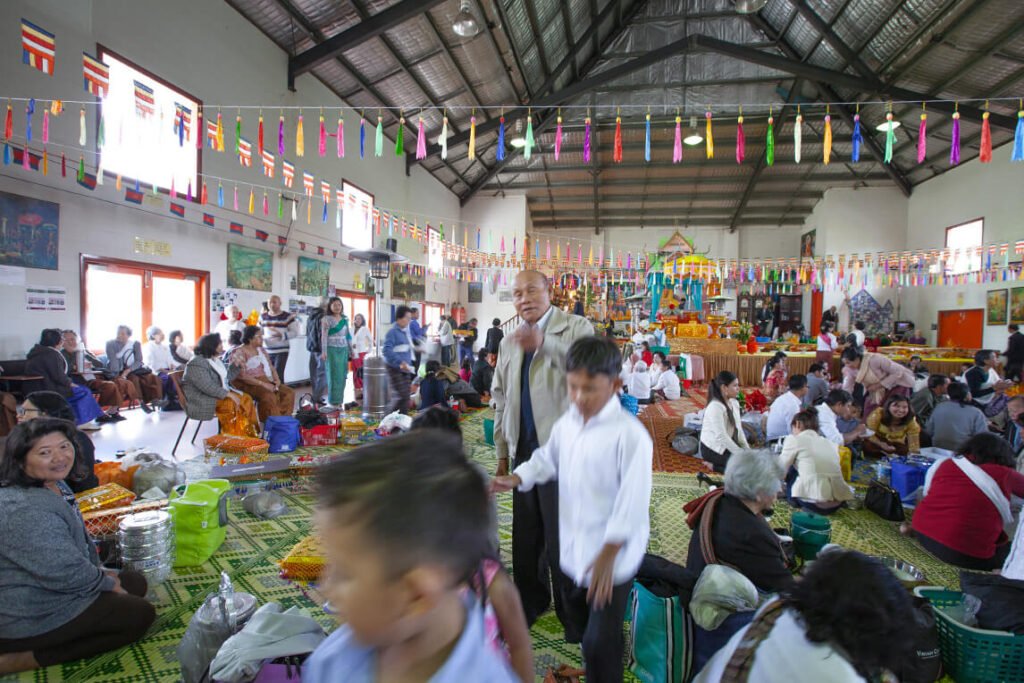
Monks chant and offer teachings. Elders reconnect with friends. Families prepare and share food. Children see traditions that their parents and grandparents grew up with. Young people meet others who share the same heritage.
Khmer can be heard around them.
Incense fills the air.
Traditional foods appear on the tables.
Parents explain customs to their children.
Grandparents tell stories.
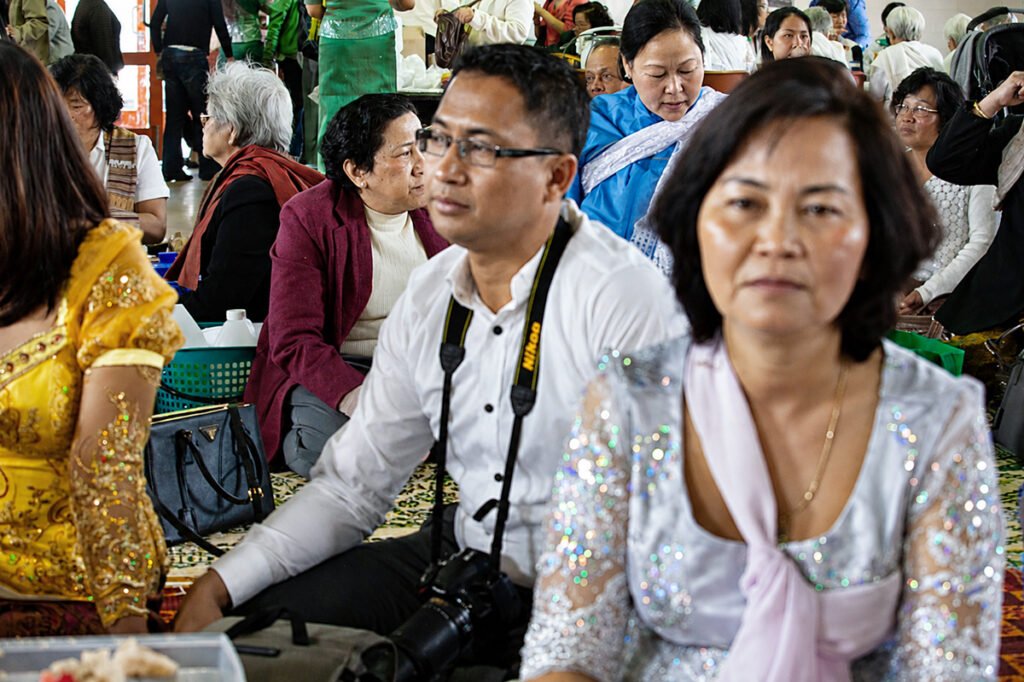
For a few hours, generations that sometimes seem very far apart are brought together in the same place.
For Khmer Australians, this is one of the quiet but powerful roles our temples continue to play.
Remembering Is Also Preserving
Culture does not survive simply because it is written in books.
It survives because people continue to practise it, talk about it, share it and pass it on.
Every young person who asks their grandmother, “Why do we celebrate Pchum Ben?” is helping preserve our heritage.
Every parent who brings their children to the temple is helping preserve it.
Every person who learns the meaning behind a prayer, prepares traditional food, listens to the stories of an elder or remembers the name of an ancestor is carrying a small part of that heritage forward.
You do not have to choose between being Australian and being Khmer.
For younger generations, these identities can live together.
Australia may be the country where you were born, study, work and build your future.
Cambodia is part of the story that brought your family here.
Pchum Ben provides an opportunity to remember both.
Remembering Those Who Came Before Us
One day, the generation that remembers Cambodia before coming to Australia will no longer be with us.
Their stories will depend on us.
Their photographs will depend on us.
Their traditions will depend on us.
And the responsibility for passing them to another generation will eventually belong to today’s young Khmer Australians.
That is perhaps one of the deepest meanings of Pchum Ben.
We remember our ancestors not simply because they belong to the past.
We remember them because they are part of who we are.
So when families gather at the temple during Pchum Ben — when we offer food, light incense, listen to the monks and dedicate merit to those who have passed away — we are doing something that connects past, present and future.
We remember those who came before us.
We give thanks for what they gave us.
And we carry their memory forward.
បុណ្យភ្ជុំបិណ្ឌ reminds us that although generations pass, gratitude, family, faith and heritage can continue from one generation to the next.