
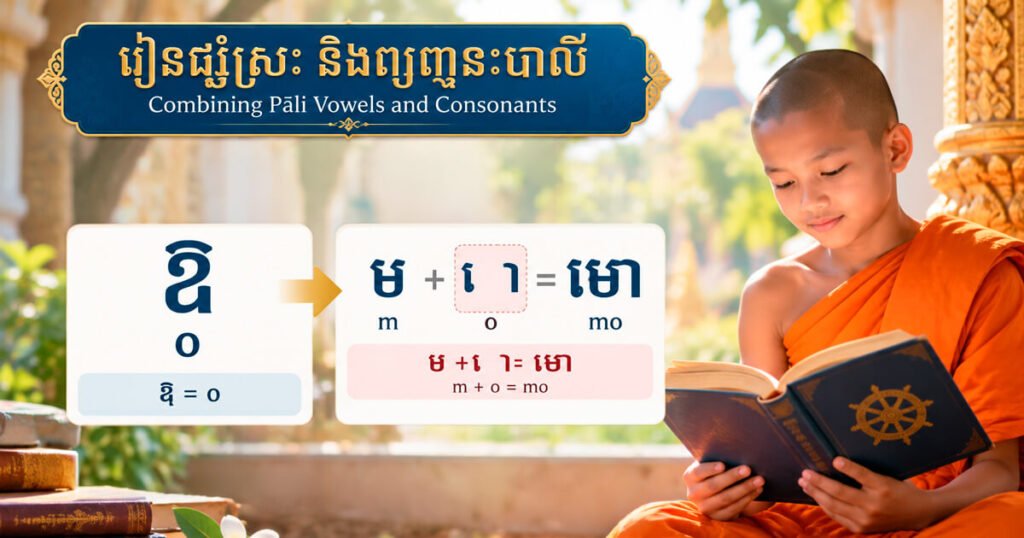
រៀនផ្សំស្រៈ និងព្យញ្ជនៈបាលី
Combining Pāli Vowels and Consonants
1. Introduction
រៀនពីរបៀបដែលស្រៈបាលីផ្សំជាមួយព្យញ្ជនៈ ដើម្បីបង្កើតជាព្យាង្គ និងពាក្យបាលី។
ស្វែងយល់ពីរបៀបដែលស្រៈដែលអ្នកទើបបានរៀន ប្រែប្រួលនៅពេលផ្សំជាមួយព្យញ្ជនៈ ហើយចាប់ផ្ដើមរៀនផ្សំព្យាង្គ និងពាក្យបាលី។
Learn how the vowels you have just studied change when they are combined with consonants, and begin forming Pāli syllables and words.
១. ស្រៈឈរដោយខ្លួនឯង និងស្រៈផ្សំជាមួយព្យញ្ជនៈ
Independent Vowels and Vowels with Consonants
នៅក្នុងមេរៀនមុន យើងបានរៀនស្រៈបាលីទាំង ៨៖
អ អា ឥ ឦ ឧ ឩ ឯ ឱ
នៅពេលស្រៈចាប់ផ្ដើមព្យាង្គ វាអាចប្រើជាទម្រង់ស្រៈពេញតួ។ ប៉ុន្តែនៅពេលស្រៈផ្សំជាមួយព្យញ្ជនៈ ស្រៈខ្លះនឹងប្ដូរទម្រង់ ហើយសរសេរភ្ជាប់ជាមួយព្យញ្ជនៈ។
In the previous lesson, we learned the eight Pāli vowels. When a vowel begins a syllable, its independent form can be used. When a vowel is combined with a consonant, some vowels change form and are written as vowel signs attached to the consonant.
ឧទាហរណ៍ — Example
ឱ = o
ឱ ជាទម្រង់ស្រៈពេញតួ។
ឱ is the independent form of the vowel o.
នៅពេលសំឡេង o ផ្សំជាមួយ ម (m) យើងប្រើសញ្ញាស្រៈ ោ៖
ម + ោ = មោ
m + o = mo
ដូច្នេះ៖
ន + មោ = នមោ
na + mo = namo
២. ស្រៈទាំង ៨ ពេលផ្សំជាមួយព្យញ្ជនៈ
The 8 Vowels with a Consonant
ដើម្បីងាយយល់ យើងនឹងប្រើព្យញ្ជនៈ ក (k) ជាឧទាហរណ៍ ហើយផ្សំវាជាមួយស្រៈទាំង ៨។
To make this easier to understand, we will use the consonant ក (k) and combine it with each of the eight vowels.
អ → ក
ka
អា → កា
kā
ឥ → កិ
ki
ឦ → កី
kī
ឧ → កុ
ku
ឩ → កូ
kū
ឯ → កេ
ke
ឱ → កោ
ko
ចំណាំ — Note
សង្កេតមើលថា ស្រៈខ្លះប្ដូរទម្រង់នៅពេលផ្សំជាមួយព្យញ្ជនៈ៖
Notice how the vowel forms change when they are attached to a consonant:
អ → (គ្មានសញ្ញាស្រៈបន្ថែម)
អា → ា
ឥ → ិ
ឦ → ី
ឧ → ុ
ឩ → ូ
ឯ → េ
ឱ → ោ
៣. ស្រៈ «អ» ដែលមិនបង្ហាញជាសញ្ញា
The Inherent Vowel “a”
នេះជាចំណុចសំខាន់មួយសម្រាប់អ្នកចាប់ផ្ដើមរៀនអានបាលី។
នៅពេលយើងឃើញ៖
ក
យើងអានថា៖
ka
មិនចាំបាច់មានសញ្ញាស្រៈ ា ិ ី ុ ូ េ ោ ភ្ជាប់ជាមួយ ក ទេ។ សំឡេង a មាននៅជាមួយព្យញ្ជនៈក្នុងករណីនេះ។
This is an important point for beginners. In this basic Pāli reading context, when no other vowel sign is attached to ក, it is read with the vowel a:
ក = ka
ប៉ុន្តែបើបន្ថែមស្រៈ ា៖
ក + ា = កា
kā
ដូច្នេះ៖
ក = ka
កា = kā
សំឡេង a និង ā មិនដូចគ្នាទេ។ a ជាស្រៈខ្លី រីឯ ā ជាស្រៈវែង។
The sounds a and ā are different. a is a short vowel, while ā is a long vowel.
៤. ស្រៈខ្លី និងស្រៈវែង
Short and Long Vowels
នៅក្នុងមេរៀនមុន យើងបានស្គាល់ស្រៈខ្លី និងស្រៈវែង។ ឥឡូវនេះ យើងអាចស្តាប់ និងប្រៀបធៀបសំឡេងទាំងនេះ នៅពេលវាផ្សំជាមួយព្យញ្ជនៈ។
In the previous lesson, we learned about short and long vowels. Now we can hear and compare them when they are combined with a consonant.
a / ā
ក — ka
កា — kā
i / ī
កិ — ki
កី — kī
kā
u / ū
កុ — ku
កូ — kū
សូមស្តាប់សំឡេងនីមួយៗ ហើយហាត់អានតាម ដើម្បីសម្គាល់ភាពខុសគ្នារវាងស្រៈខ្លី និងស្រៈវែង។
Listen carefully to each sound and practise reading along to recognise the difference between short and long vowels.
ឯ (e) និង ឱ (o) ត្រូវបានរាប់ជាស្រៈវែងក្នុងប្រព័ន្ធស្រៈបាលីនេះ។
e and o are treated as long vowels in this Pāli vowel system.
៥. ហាត់ផ្សំស្រៈជាមួយព្យញ្ជនៈ
Practise Combining Vowels and Consonants
ឥឡូវនេះ យើងសាកល្បងប្រើព្យញ្ជនៈមួយទៀតគឺ ម (m) ហើយផ្សំជាមួយស្រៈផ្សេងៗ។
Now let us practise with another consonant, ម (m), and combine it with different vowels.
ម = ma
ម + ា = មា
mā
ម + ិ = មិ
mi
ម + ី = មី
mi
ម + ុ = មុ
mu
ម + ូ = មូ
mū
ម + េ = មេ
me
ម + ោ = មោ
mo
នៅពេលយើងយល់ពីរបៀបផ្សំនេះ យើងមិនចាំបាច់ទន្ទេញចាំគ្រប់ព្យាង្គនីមួយៗទេ។ យើងអាចមើលសញ្ញាស្រៈ ហើយដឹងពីរបៀបអានវាជាមួយព្យញ្ជនៈ។
Once we understand this pattern, we don’t need to memorise every combination separately. We begin recognising what the vowel sign does to the consonant.
៦. ចាប់ផ្ដើមអានពាក្យបាលី
Beginning to Read Pāli Words
ឥឡូវនេះ យើងអាចយកអ្វីដែលបានរៀនមកប្រើ ដើម្បីអានពាក្យបាលីដំបូងរបស់យើង។
Now we can use what we have learned to begin reading a Pāli word.
នមោ — Namo
ដំបូង យើងបំបែកពាក្យនេះជាពីរព្យាង្គ៖
First, we divide the word into two syllables:
ន = na
ន បញ្ចេញសំឡេង na។
ម + ោ = មោ
mo
សញ្ញាស្រៈ ោ (o) ផ្សំជាមួយ ម (m) បង្កើតបានជា មោ (mo)។
ដូច្នេះ៖
ន + មោ = នមោ
na + mo = namo
នមោ — ការគោរព / ការនមស្ការ
Homage / reverence
ឥឡូវនេះ យើងមិនត្រឹមតែចាំថា នមោ = namo ទេ ប៉ុន្តែយើងក៏ចាប់ផ្ដើមយល់ពីរបៀបដែលពាក្យនេះត្រូវបានបង្កើត និងអានផងដែរ។
Now we are not simply memorising that នមោ means “namo.” We are beginning to understand how the word is formed and how to read it.
៧. ហាត់អានដោយខ្លួនឯង
Reading Practice
សូមសាកល្បងអានព្យាង្គខាងក្រោមដោយខ្លួនឯងសិន មុនពេលចុច 🔊 ស្តាប់។
Try reading each syllable yourself before selecting 🔊 Listen.
កា
កិ
កុ
កេ
កោ
សូមអានដោយខ្លួនឯងសិន រួចបើកមើលចម្លើយ ដើម្បីផ្ទៀងផ្ទាត់ការអានរបស់អ្នក។
Try reading them yourself first, then reveal the answers to check your reading.
ចម្លើយ — Answers
កា — kā
កិ — ki
កុ — ku
កេ — ke
កោ — ko
៨. ពាក្យបាលី
Your Next Pāli Words
នៅពេលយើងចាប់ផ្ដើមអានពាក្យបាលីកាន់តែច្រើន យើងនឹងឃើញទម្រង់ថ្មីៗ ដូចជាព្យញ្ជនៈដែលផ្សំគ្នា និងព្យញ្ជនៈដែលមានសំឡេងទ្វេ។
As we begin reading more Pāli words, we will encounter new patterns, including consonants that occur together and doubled consonant sounds.
ឧទាហរណ៍៖
For example:
តស្ស — tassa
ភគវតោ — bhagavato
អរហតោ — arahato
សម្មាសម្ពុទ្ធស្ស — sammāsambuddhassa
យើងនឹងរៀនពីរបៀបអានទម្រង់ទាំងនេះជាបន្តបន្ទាប់ ដោយមិនចាំបាច់ប្រញាប់រៀនទាំងអស់ក្នុងពេលតែមួយ។
We will learn how to read these patterns gradually, without needing to learn everything at once.
៩. បន្តការសិក្សា
Continue Learning
ឥឡូវនេះ អ្នកបានរៀនពីរបៀបដែលស្រៈផ្សំជាមួយព្យញ្ជនៈ និងរបៀបដែលវាបង្កើតជាព្យាង្គ និងពាក្យបាលីសាមញ្ញ។
នៅមេរៀនបន្ទាប់ យើងនឹងស្វែងយល់ពីក្រុមព្យញ្ជនៈបាលី និងកន្លែងដែលសំឡេងនីមួយៗត្រូវបានបញ្ចេញក្នុងមាត់ និងបំពង់ក។
Now that you understand how vowels combine with consonants, the next lesson will explain how Pāli consonants are organised and where the different sounds are produced in the mouth and throat.
មេរៀនបន្ទាប់ — Next Lesson
កណ្ឋជៈ — Kaṇṭhaja
សំឡេងកើតនៅតំបន់បំពង់ក
តាលុជៈ — Tāluja
សំឡេងកើតនៅតំបន់ក្រអូមមាត់