
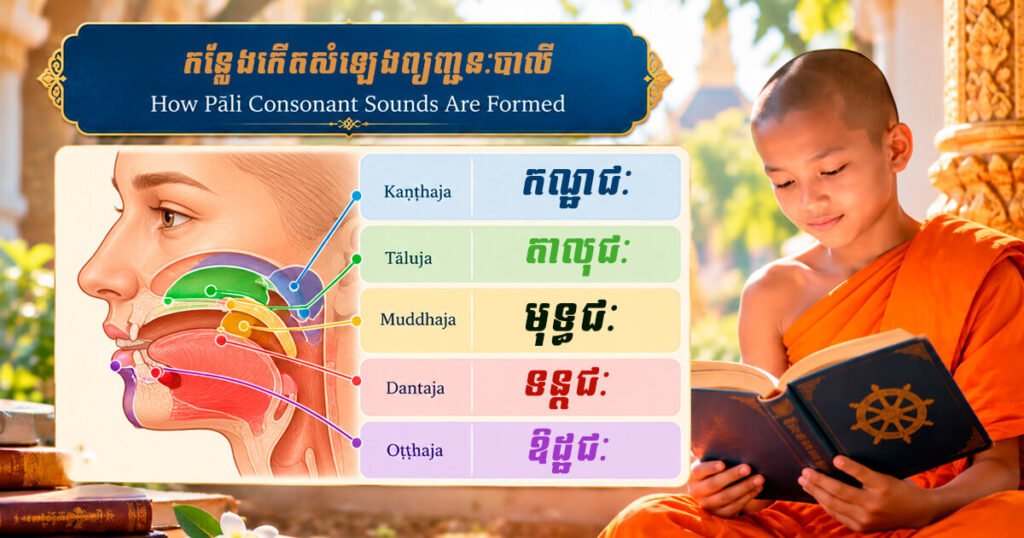
កន្លែងកើតសំឡេងព្យញ្ជនៈបាលី
How Pāli Consonant and Vowel Sounds Are Formed
នៅក្នុងមេរៀននេះ យើងនឹងរៀនអំពី កន្លែងកើតសំឡេងព្យញ្ជនៈបាលី និងរបៀបដែលសំឡេងនីមួយៗកើតឡើងនៅក្នុងមាត់។
ព្យញ្ជនៈបាលីត្រូវបានរៀបចំជាក្រុមទៅតាម ទីកន្លែងដែលសំឡេងកើតឡើង ដូចជា បំពង់ក ក្រអូមមាត់ ដំបូលមាត់ ធ្មេញ និងបបូរមាត់។ ការយល់ដឹងអំពីទីតាំងទាំងនេះ នឹងជួយឱ្យយើងអាន និងបញ្ចេញសំឡេងបាលីបានកាន់តែច្បាស់។
In this lesson, we will learn where Pāli consonant sounds are produced and how the different groups of sounds are formed in the mouth. Understanding the position of the tongue, teeth, palate, throat and lips can help us pronounce Pāli more clearly.
ហេតុអ្វីព្យញ្ជនៈបាលីត្រូវបានបែងចែកជាក្រុម?
Why Are Pāli Consonants Divided into Groups?
ព្យញ្ជនៈបាលីមិនត្រូវបានរៀបចំជាក្រុមដោយចៃដន្យទេ។ ព្យញ្ជនៈត្រូវបានរៀបចំទៅតាម កន្លែងកើតសំឡេង នៅក្នុងមាត់។
ឧទាហរណ៍ សំឡេងខ្លះកើតនៅបំពង់ក ខ្លះនៅក្រអូមមាត់ ខ្លះនៅដំបូលមាត់ ខ្លះនៅធ្មេញ និងខ្លះទៀតនៅបបូរមាត់។
ការស្គាល់កន្លែងកើតសំឡេងទាំងនេះ ជួយឱ្យយើងយល់ពីរបៀបបញ្ចេញសំឡេង និងអានភាសាបាលីបានកាន់តែត្រឹមត្រូវ។
The Pāli consonants are not arranged into groups randomly. They are organised according to the place where each sound is produced in the mouth.
Some sounds are produced at the throat, some at the palate, some at the roof of the mouth, some at the teeth, and others at the lips. Understanding these places of articulation helps us pronounce and read Pāli more accurately.
ក្រុមសំខាន់ៗទាំង ៥ នៃព្យញ្ជនៈ
The Five Main Consonant Groups
កណ្ឋជៈ — Kaṇṭhaja
កើតសំឡេងនៅបំពង់ក
Sounds produced at the throat.
តាលុជៈ — Tāluja
កើតសំឡេងនៅក្រអូមមាត់
Sounds produced at the palate.
មុទ្ធជៈ — Muddhaja
កើតសំឡេងនៅដំបូលមាត់ ដោយចុងអណ្ដាតថយទៅខាងក្រោយ
Sounds produced at the roof of the mouth, with the tip of the tongue curled back.
ទន្តជៈ — Dantaja
កើតសំឡេងនៅធ្មេញ
Sounds produced at the teeth.
ឱដ្ឋជៈ — Oṭṭhaja
កើតសំឡេងដោយបបូរមាត់
Sounds produced with the lips.
១. កណ្ឋជៈ — Kaṇṭhaja
សំឡេងកើតនៅបំពង់ក
Sounds Produced at the Throat
ក ខ គ ឃ ង
ka · kha · ga · gha · ṅa
កណ្ឋជៈ (Kaṇṭhaja) ជាឈ្មោះសម្រាប់ក្រុមសំឡេងដែលកើតនៅផ្នែកខាងក្រោយនៃមាត់ និងតំបន់បំពង់ក។
នៅពេលយើងបញ្ចេញសំឡេង ក ខ គ ឃ ង ផ្នែកខាងក្រោយនៃអណ្ដាតធ្វើការជាមួយផ្នែកខាងក្រោយនៃមាត់។
សាកល្បងនិយាយយឺតៗ៖
ក — ka
ខ — kha
គ — ga
ឃ — gha
ង — ṅa
សូមសង្កេតថា ទីតាំងនៃអណ្ដាតមានលក្ខណៈប្រហាក់ប្រហែលគ្នា ប៉ុន្តែរបៀបបញ្ចេញសំឡេង និងខ្យល់ខុសគ្នា។
These five sounds are produced at the throat, but they differ in how the voice and breath are used.
សាកល្បងស្តាប់ភាពខុសគ្នា
Listen to the Difference
ក — ka
ខ — kha
គ — ga
ឃ — gha
ង — ṅa
ពេលអាន kha និង gha មានខ្យល់ចេញខ្លាំងជាង ka និង ga។
២. តាលុជៈ — Tāluja
សំឡេងកើតនៅក្រអូមមាត់
Sounds Produced at the Palate
ច ឆ ជ ឈ ញ
ca · cha · ja · jha · ña
តាលុជៈ (Tāluja) ជាក្រុមសំឡេងដែលកើតនៅតំបន់ក្រអូមមាត់។
នៅពេលបញ្ចេញសំឡេងទាំងនេះ ផ្នែកកណ្ដាលនៃអណ្ដាតលើកឡើងទៅជិតក្រអូមមាត់ ដើម្បីបង្កើតសំឡេង។
សាកល្បងអានយឺតៗ៖
ច — ca
ឆ — cha
ជ — ja
ឈ — jha
ញ — ña
សូមស្តាប់ភាពខុសគ្នា
ច — ca
ឆ — cha
ជ — ja
ឈ — jha
ញ — ña
ញ — ña ជាសំឡេងច្រមុះ។ ខ្យល់មួយផ្នែកចេញតាមច្រមុះនៅពេលបញ្ចេញសំឡេងនេះ។
៣. មុទ្ធជៈ — Muddhaja
សំឡេងដែលចុងអណ្ដាតថយទៅខាងក្រោយ
Retroflex / Cerebral Sounds
ដ ឋ ឌ ឍ ណ
ṭa · ṭha · ḍa · ḍha · ṇa
សំឡេង ដ ឋ ឌ ឍ ណ បញ្ចេញដោយបត់ចុងអណ្ដាតថយទៅខាងក្រោយ ហើយប៉ះ ឬខិតជិតដំបូលមាត់។
The sounds ṭa · ṭha · ḍa · ḍha · ṇa are pronounced by curling the tip of the tongue back toward the roof of the mouth.
ដ — ṭa
ឋ — ṭha
ឌ — ḍa
ឍ —ḍha
ណ — ṇa
សូមស្តាប់ភាពខុសគ្នា
ដ — ṭa
ឋ — ṭha
៤. ទន្តជៈ — Dantaja
សំឡេងកើតនៅតំបន់ធ្មេញ
Sounds Produced at the Teeth
ត ថ ទ ធ ន
ta · tha · da · dha · na
ទន្តជៈ (Dantaja) ជាក្រុមសំឡេងដែលបញ្ចេញដោយយកចុងអណ្ដាតទៅប៉ះ ឬទៅជិតធ្មេញខាងលើ។
ពាក្យ ទន្ត (danta) មានន័យថា ធ្មេញ។ ដូច្នេះ ឈ្មោះ ទន្តជៈ អាចជួយឱ្យយើងចងចាំថា សំឡេងក្រុមនេះកើតនៅតំបន់ធ្មេញ។
Dantaja means dental sounds. They are pronounced with the tip of the tongue at or against the upper teeth.
ទីតាំងអណ្ដាត
នៅពេលបញ្ចេញសំឡេង ត ថ ទ ធ ន ចុងអណ្ដាតត្រូវទៅខាងមុខ ហើយប៉ះ ឬទៅជិតធ្មេញខាងលើ។
ហាត់អាន និងស្តាប់
ត — ta
ថ — tha
ទ — da
ធ — dha
ន — na
ចំណាំសំខាន់
សំឡេង tha ក្នុងភាសាបាលី មិនមែនជាសំឡេង “th” ក្នុងភាសាអង់គ្លេស ដូចក្នុងពាក្យ think ឬ this ទេ។
tha គឺជាសំឡេង ta ដែលបញ្ចេញជាមួយខ្យល់ខ្លាំងជាង។
ដូចគ្នានេះដែរ៖
da → dha
សំឡេង dha គឺជាសំឡេង da ដែលមានខ្យល់បន្ថែម។ វា មិនមែនអានជា “d + ha” ពីរព្យាង្គទេ។
ចំណុចសំខាន់គឺ ត្រូវស្តាប់ និងហាត់បញ្ចេញខ្យល់ឱ្យឮភាពខុសគ្នារវាង ta / tha និង da / dha។
៥. ឱដ្ឋជៈ — Oṭṭhaja
សំឡេងកើតនៅបបូរមាត់
Sounds Produced with the Lips
ប ផ ព ភ ម
pa · pha · ba · bha · ma
ឱដ្ឋជៈ (Oṭṭhaja) ជាសំឡេងដែលបញ្ចេញដោយប្រើបបូរមាត់។ នៅពេលបញ្ចេញសំឡេងទាំងនេះ បបូរមាត់ទាំងពីរត្រូវបានប្រើដើម្បីបង្កើតសំឡេង។
Oṭṭhaja refers to sounds produced with the lips. The two lips are used to form these sounds.
ហាត់អាន និងស្តាប់ · Practise
ប — pa
ផ — pha
ព — ba
ភ — bha
ម — ma
ចំណាំសំខាន់ · Important Note
pha ជាសំឡេង pa ដែលមានខ្យល់ចេញខ្លាំងជាង។
bha ជាសំឡេង ba ដែលមានខ្យល់ចេញខ្លាំងជាង។
pha and bha are aspirated sounds. The h indicates an extra breath of air; it is not pronounced as a separate syllable.
សាកស្តាប់ភាពខុសគ្នា៖
pa ↔ pha
ba ↔ bha
៦. សាសវជៈ — Sāsavaja
ព្យញ្ជនៈក្រៅពី ៥ វគ្គខាងលើ
Consonants Outside the Five Main Groups
ក្រៅពីព្យញ្ជនៈទាំង ៥ វគ្គខាងលើ ភាសាបាលីនៅមានព្យញ្ជនៈមួយចំនួនទៀត ដែលមិនស្ថិតនៅក្នុងវគ្គទាំង ៥ នោះទេ។
ព្យញ្ជនៈទាំងនេះក៏មានសារៈសំខាន់ក្នុងការអានពាក្យ និងបទសូត្របាលីផងដែរ។<br><br>
In addition to the five main consonant groups above, Pāli has several other consonants that do not belong to those five groups.
These sounds are also important when reading Pāli words and chants.
យ រ ល វ ស ហ ឡ អំ
ya · ra · la · va · sa · ha · ḷa · ṃ
ហាត់អាន និងស្តាប់ · Practise
យ — ya
រ — ra
ល — la
វ — va
ស — sa
ហ — ha
ឡ — ḷa
អំ — ṃ
ចំណាំសំខាន់
Important Note
ព្យញ្ជនៈទាំងនេះមិនត្រូវបានរៀបចំជាវគ្គ ៥ តួ ដូចជា ក ខ គ ឃ ង ឬ ត ថ ទ ធ ន នោះទេ។
ដូច្នេះ យើងរៀនវាដាច់ដោយឡែកពីព្យញ្ជនៈទាំង ៥ វគ្គខាងលើ។
These consonants are not arranged in five-letter groups like ka · kha · ga · gha · ṅa or ta · tha · da · dha · na. Therefore, we learn them separately from the five main groups.
៧. ស្រៈ — Vowels
ស្រៈទាំង ៨ ក្នុងភាសាបាលី
The Eight Pāli Vowels
បន្ទាប់ពីយើងបានស្គាល់ព្យញ្ជនៈរួចហើយ ឥឡូវយើងមកមើល ស្រៈទាំង ៨ ដែលប្រើក្នុងភាសាបាលី។<br><br>
Now that we have learned the consonants, we can look at the eight vowels used in Pāli.
អ អា ឥ ឦ ឧ ឩ ឯ ឱ
a · ā · i · ī · u · ū · e · o
ហាត់អាន និងស្តាប់ · Practise
អ — a
អា — ā
ឥ — i
ឦ — ī
ឧ — u
ឩ — ū
ឯ — e
ឱ — o
ស្រៈខ្លី និងស្រៈវែង
Short and Long Vowels
ស្រៈខ្លះមានសំឡេងខ្លី ហើយស្រៈខ្លះមានសំឡេងវែង។
ការស្គាល់ភាពខុសគ្នារវាងសំឡេងខ្លី និងសំឡេងវែង នឹងជួយឱ្យយើងអានពាក្យបាលីបានកាន់តែច្បាស់។
Some Pāli vowels are short and others are long. Recognising this difference helps us pronounce Pāli words more accurately.
សាកប្រៀបធៀប
អ — a ↔ អា — ā
ឥ — i ↔ ឦ — ī
ឧ — u ↔ ឩ — ū
ស្រៈ ឯ និង ឱ
ឯ — e
ឱ — o
ស្រៈ ឯ (e) និង ឱ (o) ត្រូវបានអានជាសំឡេងរបស់វា ហើយយើងនឹងឃើញរបៀបដែលស្រៈទាំងនេះផ្សំជាមួយព្យញ្ជនៈនៅក្នុងមេរៀនបន្ទាប់ៗ។
The vowels e and o have their own sounds. We will see how these vowels combine with consonants as we continue through the course.
ឥឡូវយើងអាចភ្ជាប់សំឡេងជាមួយគ្នា
Now We Can Put the Sounds Together
ឥឡូវនេះ យើងបានស្គាល់៖
ព្យញ្ជនៈ ៥ វគ្គ
ព្យញ្ជនៈក្រៅវគ្គ
និងស្រៈទាំង ៨
យើងអាចចាប់ផ្ដើមយកសំឡេងទាំងនេះមកផ្សំគ្នា ដើម្បីអានពាក្យបាលី។
We have now learned the five main consonant groups, the additional consonants, and the eight Pāli vowels.
ចងចាំ
មើលអក្សរ → ស្គាល់សំឡេង → បញ្ចេញសំឡេង → ផ្សំសំឡេង → អានពាក្យ
See the letter → recognise the sound → pronounce it → combine the sounds → read the word
៨. ហេតុអ្វីក្នុងមួយក្រុមមាន ៥ តួ?
Why Are There Five Consonants in Each Group?
ឥឡូវនេះ មេរៀនកាន់តែគួរឱ្យចាប់អារម្មណ៍ ព្រោះអ្នកអាចសង្កេតឃើញថា ក្រុមនីមួយៗមានព្យញ្ជនៈចំនួន ៥ តួ ដូចគ្នា។
Now the lesson becomes even more interesting, because you may notice that each group contains exactly five consonants.
អ្នកប្រហែលជាឆ្ងល់ថា៖
You may be wondering:
ហេតុអ្វីបានជាក្រុមនីមួយៗមានព្យញ្ជនៈ ៥ តួ?
Why does every group contain five consonants?
មូលហេតុគឺ ព្យញ្ជនៈទាំង ៥ ក្នុងក្រុមនីមួយៗ ត្រូវបានរៀបចំតាមលំនាំសំឡេងដូចគ្នា។
The reason is that the five consonants in each group follow the same sound pattern.
យើងអាចមើលឃើញលំនាំនេះបានយ៉ាងងាយ ដោយចាប់ផ្ដើមពីក្រុមទីមួយ៖
We can see this pattern clearly by starting with the first group:
ក ខ គ ឃ ង
ka · kha · ga · gha · ṅa
ក — ka
គ្មានខ្យល់បន្ថែម
Without aspiration
ខ — kha
សំឡេងមានខ្យល់បន្ថែម
With aspiration / extra breath
គ — ga
សំឡេងមានសំឡេងបំពង់ក (voiced)
Voiced
ឃ — gha
សំឡេងមានសំឡេងបំពង់ក និងមានខ្យល់បន្ថែម
Voiced + aspirated
ង — ṅa
សំឡេងច្រមុះ
Nasal
សង្កេតមើលលំនាំ
Notice the Pattern
លំនាំដូចគ្នានេះកើតឡើងម្ដងហើយម្ដងទៀតនៅក្នុងក្រុមទាំង ៥។
The same pattern is repeated across all five groups.
ka → kha → ga → gha → ṅa
ca → cha → ja → jha → ña
ṭa → ṭha → ḍa → ḍha → ṇa
ta → tha → da → dha → na
pa → pha → ba → bha → ma
ចំណុចសំខាន់ដែលត្រូវចងចាំ
Key Idea to Remember
ព្យញ្ជនៈទាំង ២៥ តួ នេះ មិនមែនជាអក្សរ ២៥ តួដែលគ្មានទំនាក់ទំនងនឹងគ្នានោះទេ។
These 25 consonants are not simply 25 unrelated letters.
តាមពិត ពួកវាត្រូវបានរៀបចំជា ៥ ក្រុម ហើយក្រុមនីមួយៗមាន ៥ តួ ដែលអនុវត្តតាមលំនាំសំឡេងដូចគ្នា។
Instead, they are organised into five groups, with five consonants in each group following the same sound pattern.
នៅពេលយើងយល់ពីលំនាំនេះ ការរៀនព្យញ្ជនៈបាលីក៏កាន់តែងាយស្រួល ព្រោះយើងមិនចាំបាច់ចងចាំអក្សរទាំង ២៥ តួ ដាច់ដោយឡែកពីគ្នាទៀតទេ។
Once we understand this pattern, learning the Pāli consonants becomes much easier because we no longer need to think of all 25 letters as separate, unrelated sounds.
៥ ក្រុម × ៥ តួ = ២៥ តួ
5 groups × 5 consonants = 25 consonants
៩. សាកល្បងខ្យល់ដោយប្រើបាតដៃ
Feel the Difference in Aspiration
នេះអាចធ្វើជាលំហាត់សាមញ្ញនៅផ្ទះបាន។
ដាក់បាតដៃនៅពីមុខមាត់
និយាយយឺតៗ៖
ក — ka
បន្ទាប់មក៖
ខ — kha
សូមសង្កេតមើលភាពខុសគ្នា។ នៅពេលនិយាយ ខ — kha អ្នកអាចមានអារម្មណ៍ថា មានខ្យល់ប៉ះបាតដៃខ្លាំងជាងពេលនិយាយ ក — ka។
Notice the difference. When you say ខ — kha, you should feel a stronger puff of air against your palm than when you say ក — ka.
សាកល្បងជាមួយសំឡេងទាំងនេះ
Try These Sound Pairs
ក — ka ↔ ខ — kha
ច — ca ↔ ឆ — cha
ត — ta ↔ ថ — tha
ប — pa ↔ ផ — pha
សាកល្បងអានគូនីមួយៗយឺតៗ ហើយសង្កេតមើលថា សំឡេងទីពីរមានខ្យល់ចេញខ្លាំងជាងសំឡេងទីមួយ។
Say each pair slowly and notice that the second sound has a stronger release of air than the first.
ពាក្យងាយចងចាំ
An easy way to remember
ក — ka → គ្មានខ្យល់ខ្លាំង
ក — ka → No strong puff of air
ខ — kha → មានខ្យល់ចេញខ្លាំងជាង
ខ — kha → Stronger puff of air
លំហាត់សាមញ្ញនេះជួយឱ្យអ្នក មានអារម្មណ៍ដោយផ្ទាល់ នូវភាពខុសគ្នារវាងសំឡេងគ្មានខ្យល់ខ្លាំង និងសំឡេងមានខ្យល់ចេញខ្លាំងជាង។
This simple exercise helps you physically feel the difference between an unaspirated and an aspirated consonant.
សម្រាប់អ្នកទើបចាប់ផ្ដើមរៀន មិនចាំបាច់ព្យាយាមចងចាំពាក្យបច្ចេកទេស “aspiration” ភ្លាមៗទេ។
As a beginner, you do not need to memorise the technical word “aspiration” straight away.
ដំបូងគ្រាន់តែចងចាំថា៖
For now, simply remember:
គ្មានខ្យល់ខ្លាំង → ក — ka
មានខ្យល់ចេញខ្លាំងជាង → ខ — kha
No strong puff of air → ក — ka
Stronger puff of air → ខ — kha
១០. មុទ្ធជៈ និង ទន្តជៈ
Retroflex and Dental Sounds
នេះជាក្រុមសំឡេងពីរដែលអ្នកទើបចាប់ផ្ដើមរៀនគួរយកចិត្តទុកដាក់ ព្រោះសំឡេងរបស់វាអាចស្ដាប់ទៅស្រដៀងគ្នា ប៉ុន្តែ ទីតាំងរបស់អណ្ដាតខុសគ្នា។
These are two sound groups that beginners should pay special attention to. They may sound similar at first, but the position of the tongue is different.
មុទ្ធជៈ — Muddhaja
ចុងអណ្ដាតថយទៅខាងក្រោយ
Tip of the tongue curls back
ដ — ṭa · ឋ — ṭha · ឌ — ḍa · ឍ —ḍha · ណ — ṇa
នៅពេលបញ្ចេញសំឡេងក្រុម មុទ្ធជៈ ចុងអណ្ដាតមិនទៅប៉ះធ្មេញទេ។ ចុងអណ្ដាតបត់ថយទៅខាងក្រោយ ឆ្ពោះទៅដំបូលមាត់។
When pronouncing Muddhaja sounds, the tip of the tongue does not move toward the teeth. Instead, it curls back toward the roof of the mouth.
ទន្តជៈ — Dantaja
ចុងអណ្ដាតទៅខាងមុខ ជិតធ្មេញ
Tip of the tongue moves forward, near the teeth
ត — ta · ថ — tha · ទ — da · ធ — dha · ន — na
នៅពេលបញ្ចេញសំឡេងក្រុម ទន្តជៈ ចុងអណ្ដាតទៅខាងមុខ ហើយប៉ះ ឬទៅជិតធ្មេញខាងលើ។
When pronouncing Dantaja sounds, the tip of the tongue moves forward and touches or comes close to the upper teeth.
សាកល្បងស្តាប់ជាគូ
Listen to the Sounds in Pairs
ដ — ṭa ↔ ត — ta
ឋ — ṭha ↔ ថ — tha
ឌ — ḍa ↔ ទ — da
ឍ —ḍha ↔ ធ — dha
ណ — ṇa ↔ ន — na
សូមស្តាប់គូនីមួយៗយឺតៗ ហើយសង្កេតមើល ទីតាំងរបស់អណ្ដាត នៅពេលអ្នកបញ្ចេញសំឡេង។
Listen to each pair slowly and pay attention to the position of your tongue as you pronounce each sound.
ពាក្យងាយចងចាំ
An Easy Way to Remember
មុទ្ធជៈ → អណ្ដាតបត់ថយទៅខាងក្រោយ
Muddhaja → Tongue curls back
ទន្តជៈ → អណ្ដាតទៅខាងមុខ ជិតធ្មេញ
Dantaja → Tongue moves forward toward the teeth
កុំបារម្ភបើដំបូងអ្នកមិនអាចស្ដាប់ឮភាពខុសគ្នាបានច្បាស់។ សូមស្តាប់ និងហាត់បញ្ចេញសំឡេងម្ដងហើយម្ដងទៀត។ បន្តិចម្ដងៗ អ្នកនឹងចាប់ផ្ដើមស្គាល់ភាពខុសគ្នារវាងក្រុមទាំងពីរនេះ។
Do not worry if you cannot hear the difference clearly at first. Listen and practise repeatedly. With practice, the distinction between the two groups will become easier to recognise.
ចំណុចសំខាន់បំផុត
The Most Important Point
មុទ្ធជៈ = អណ្ដាតថយក្រោយ
Muddhaja = Tongue back
ទន្តជៈ = អណ្ដាតទៅមុខ ជិតធ្មេញ
Dantaja = Tongue forward, near the teeth
១១. ហាត់សម្គាល់ក្រុម
Recognising the Groups
សូមសាកល្បងដោយខ្លួនឯង។ មើលអក្សរ ហើយគិតថា សំឡេងនេះកើតនៅកន្លែងណា មុនពេលបើកមើលចម្លើយ។
Look at each consonant and try to identify its group before revealing the answer.
ក — ka
តើស្ថិតក្នុងក្រុមណា?
ចម្លើយ៖
កណ្ឋជៈ — Kaṇṭhaja
ញ — ña
តើស្ថិតក្នុងក្រុមណា?
ចម្លើយ៖
តាលុជៈ — Tāluja
ន — na
តើស្ថិតក្នុងក្រុមណា?
ចម្លើយ៖
ទន្តជៈ — Dantaja
ម — ma
តើស្ថិតក្នុងក្រុមណា?
ចម្លើយ៖
ឱដ្ឋជៈ — Oṭṭhaja
១២. សង្ខេបមេរៀន
Lesson Summary
នៅក្នុងមេរៀននេះ យើងបានរៀនព្យញ្ជនៈបាលី ៥ ក្រុមសំខាន់ៗ តាមទីកន្លែងដែលសំឡេងកើតឡើង៖
កណ្ឋជៈ — Kaṇṭhaja
សំឡេងកើតនៅផ្នែកខាងក្រោយនៃមាត់
តាលុជៈ — Tāluja
សំឡេងកើតនៅក្រអូមមាត់
មុទ្ធជៈ — Muddhaja
ចុងអណ្ដាតថយទៅខាងក្រោយ
ទន្តជៈ — Dantaja
ចុងអណ្ដាតទៅខាងមុខ ជិតធ្មេញ
ឱដ្ឋជៈ — Oṭṭhaja
សំឡេងកើតដោយប្រើបបូរមាត់
ចំណុចសំខាន់
ការស្គាល់ទីកន្លែងដែលសំឡេងកើតឡើង ជួយឱ្យយើងបញ្ចេញសំឡេងបាលីបានកាន់តែច្បាស់។
Key Point
Knowing where each sound is formed helps us pronounce Pāli more clearly.
១៣. បន្តទៅមេរៀនបន្ទាប់
Continue to the Next Lesson
ឥឡូវនេះ យើងបានស្គាល់ក្រុមព្យញ្ជនៈ និងរបៀបបញ្ចេញសំឡេងរបស់វាហើយ។
នៅមេរៀនបន្ទាប់ យើងនឹងរៀនពី ព្យញ្ជនៈផ្ដុំ និងព្យញ្ជនៈទ្វេ ដែលជួយឱ្យយើងអានពាក្យបាលីបានកាន់តែត្រឹមត្រូវ។
Next Lesson
មេរៀនទី ៤
ព្យញ្ជនៈផ្ដុំ និងព្យញ្ជនៈទ្វេ
Joined and Doubled Consonants